South Korea is a fascinating destination where ancient palaces, traditional neighbourhoods and historic temples exist alongside modern cities, innovative technology, contemporary fashion and a globally influential food and entertainment scene.
For first-time visitors, South Korea travel offers a wide variety of experiences. You can explore royal palaces in Seoul, eat fresh seafood in Busan, walk through historic streets in Gyeongju, discover volcanic landscapes on Jeju Island or experience traditional Korean culture through food, markets and local activities.
South Korea also has an efficient transport network, making it possible to combine several destinations during one holiday. Official Korea Tourism Organization itineraries regularly feature combinations such as Seoul, Busan, Gyeongju and Jeju Island, reflecting the variety of experiences available across the country.
This South Korea travel guide covers:
- The best places to visit in South Korea
- What to see and do in Seoul
- Why Busan is worth visiting
- Gyeongju’s historic attractions
- Jeju Island’s natural landscapes
- Korean food and cultural experiences
- Transport and planning tips for first-time visitors
1. Seoul: The Best Starting Point for First-Time Visitors
Seoul is the natural starting point for many international visitors. It combines historic palaces and traditional neighbourhoods with modern shopping districts, restaurants, entertainment, technology and nightlife.
The city is also an excellent introduction to Korean culture.
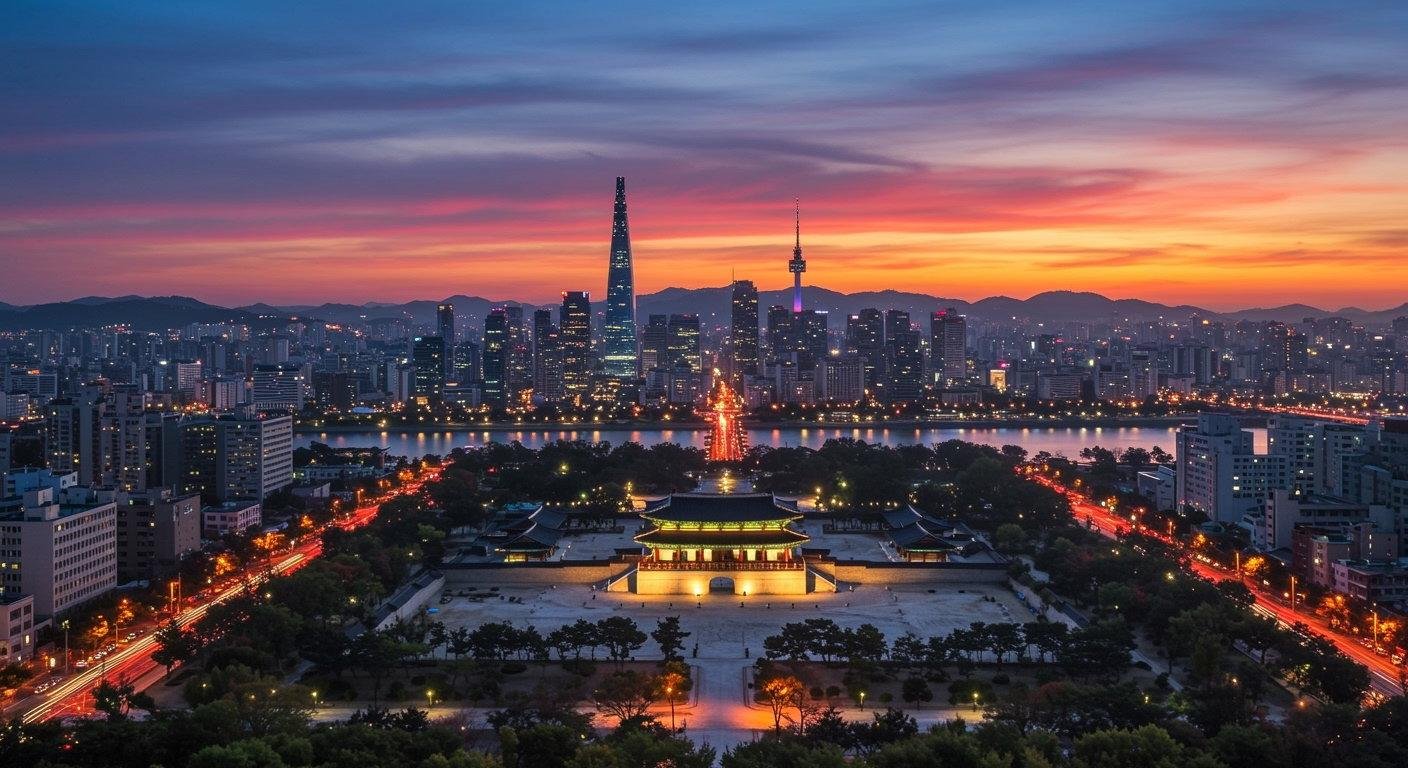
Gyeongbokgung Palace
Gyeongbokgung Palace is one of Seoul’s most important historic landmarks and was the main palace of the Joseon Dynasty.
The palace complex provides an opportunity to explore:
- Traditional Korean architecture
- Historic courtyards
- Royal buildings
- Gardens
- Cultural exhibitions
- Traditional clothing experiences
The palace is part of Seoul’s group of historic royal palaces, which also includes Changdeokgung, Deoksugung, Changgyeonggung and Gyeonghuigung. Korea Tourism Organization identifies these palaces as important representations of Joseon-era history and culture.
Bukchon Hanok Village
Bukchon Hanok Village is known for its traditional Korean houses, or hanok, and narrow streets.
The area sits between major historic attractions and is a popular place for visitors interested in traditional Korean architecture.
Visitors can explore:
- Traditional houses
- Small galleries
- Craft shops
- Tea houses
- Cultural spaces
- Scenic streets
Bukchon is also a residential neighbourhood, so visitors should keep noise levels low and respect residents’ privacy.
Insadong
Insadong is another excellent place to experience traditional Korean culture in central Seoul.
The neighbourhood is known for:
- Korean crafts
- Traditional tea
- Art galleries
- Souvenirs
- Restaurants
- Cultural shops
It can be combined with nearby palaces and traditional neighbourhoods to create a full day of cultural sightseeing.
Myeongdong
For a different side of Seoul, visit Myeongdong.
The area is particularly popular for:
- Shopping
- Korean cosmetics
- Street food
- Restaurants
- Cafés
- Fashion
It is a useful destination for travellers who want to combine sightseeing with shopping.
N Seoul Tower
N Seoul Tower, located on Namsan Mountain, offers panoramic views across Seoul.
A visit can be combined with a walk around Namsan and an evening in central Seoul.
For first-time visitors, seeing Seoul from above provides a useful perspective on just how large and densely developed the capital is.
Gangnam
Gangnam represents Seoul’s modern, commercial side.
Visitors can explore:
- Contemporary shopping
- Restaurants
- Cafés
- Entertainment
- Modern architecture
- K-pop and Korean pop-culture attractions
A South Korea holiday is often most enjoyable when Seoul’s historic and modern sides are experienced together.
2. Busan: Beaches, Seafood and Coastal Scenery
Busan is South Korea’s largest port city and offers a very different atmosphere from Seoul. It combines beaches, mountains, temples, markets and a major seafood culture.
Korea Tourism Organization highlights Busan attractions including Taejongdae Park, BUSAN X the Sky and coastal areas.
Haeundae Beach
Haeundae is one of Busan’s best-known beaches.
The area is surrounded by:
- Hotels
- Restaurants
- Cafés
- Shopping
- Coastal attractions
- Entertainment venues
It is especially lively during warmer months.
Gamcheon Culture Village
Gamcheon Culture Village is known for its colourful hillside buildings, narrow streets, murals and artistic atmosphere.
Visitors can spend several hours walking through the area, discovering:
- Street art
- Small galleries
- Local cafés
- Craft shops
- Scenic viewpoints
Because the village is built on steep terrain, comfortable footwear is recommended.
Haedong Yonggungsa Temple
Haedong Yonggungsa is a Buddhist temple located beside the coast.
Its seaside setting makes it different from many temples located inland or in mountain environments.
The combination of temple architecture, coastal cliffs and ocean views makes this one of Busan’s distinctive cultural experiences.
Jagalchi Market
Jagalchi is closely associated with Busan’s seafood culture.
Travellers can explore the market and surrounding area to see the variety of seafood that forms an important part of local cuisine.
For visitors interested in Korean food, Busan is a good place to try fresh seafood alongside regional dishes.
Taejongdae Park
Taejongdae is a coastal park on Yeongdo Island, known for forested areas, cliffs and ocean views.
Korea Tourism Organization highlights attractions in the park including Yeongdo Lighthouse and Taejongsa Temple, with a Danubi Train also available within the area.
3. Gyeongju: Discover Korea’s Ancient History
For travellers interested in Korean history, Gyeongju is one of the most important destinations to include.
Gyeongju was the capital of the Silla Kingdom for centuries and contains numerous historic sites. Korea Tourism Organization describes the city as particularly well known for its UNESCO World Heritage sites.
Bulguksa Temple
Bulguksa is one of Gyeongju’s most significant Buddhist sites.
The temple complex demonstrates traditional Korean Buddhist architecture and is surrounded by a scenic landscape.
It is particularly valuable for travellers who want to understand Korea’s historical and religious heritage.
Seokguram Grotto
Located in the mountains above Gyeongju, Seokguram is an important Buddhist heritage site associated with Bulguksa.
The site provides an opportunity to combine cultural sightseeing with mountain scenery.
Donggung Palace and Wolji Pond
Donggung Palace and Wolji Pond are particularly attractive in the evening when the historic buildings and pond are illuminated.
The site dates to the Silla period and offers an atmospheric introduction to Gyeongju’s royal history.
Daereungwon Tomb Complex
Daereungwon contains large ancient burial mounds associated with the Silla period.
The grassy mounds and surrounding parkland provide a very different landscape from the modern cities of Seoul and Busan.
Gyeongju is an excellent destination for travellers who want to add historical depth to a South Korea itinerary.
4. Jeju Island: Nature, Beaches and Volcanic Landscapes
Jeju Island is one of South Korea’s most distinctive destinations. The island is known for beaches, waterfalls, volcanic landscapes, coastal scenery and outdoor experiences.
Korea Tourism Organization describes Jeju as a major tourist destination with beaches, waterfalls, cliffs and caves.
Seongsan Ilchulbong
Seongsan Ilchulbong, also known as Sunrise Peak, is one of Jeju’s best-known natural attractions.
The volcanic tuff cone rises dramatically above the surrounding landscape and forms part of Jeju’s UNESCO-listed natural heritage.
The official tourism information notes that the summit can be reached in roughly 20–30 minutes from the ticketing area, with wooden steps along the route.
Visitors should consider weather conditions and their own fitness before making the climb.
Jeju’s Coastal Landscapes
Jeju’s coastline offers opportunities for:
- Scenic walks
- Photography
- Beach visits
- Café stops
- Boat experiences
- Exploring volcanic rock formations
Different sections of the island offer different landscapes, so it is worth allowing enough time to explore beyond one resort area.
Waterfalls
Jeju is home to several scenic waterfalls and coastal viewpoints.
Waterfall visits can be combined with other attractions to create a relaxed day of sightseeing.
Hallasan
Hallasan is South Korea’s highest mountain and dominates the centre of Jeju Island.
Outdoor enthusiasts can explore hiking routes around the mountain, although the suitability of each trail depends on fitness, weather and current trail conditions.
Families and casual travellers do not necessarily need to undertake a full summit hike to enjoy Jeju’s mountain scenery.
5. Incheon: More Than an Airport
Many international visitors first encounter South Korea through Incheon International Airport. However, Incheon itself can also be included in a holiday itinerary.
The city offers:
- Waterfront areas
- Historic sites
- Chinatown
- Modern architecture
- Shopping
- Islands and coastal attractions
Its proximity to Seoul makes it possible to combine the two destinations.
For travellers with a longer stopover, exploring Incheon can be a useful way to experience another part of the Seoul metropolitan area.
6. Gangneung and Korea’s East Coast
Travellers who want beaches, mountains and a slower pace can consider Gangneung and the east coast.
The region offers:
- Beaches
- Coastal cafés
- Mountain scenery
- Local food
- Cultural attractions
- Scenic rail journeys
Gangneung can work well as an addition to a Seoul itinerary for visitors who want to see a different side of the country.
7. Jeonju: Traditional Food and Hanok Culture
Jeonju is particularly well known for its traditional architecture and food culture.
The Jeonju Hanok Village offers an opportunity to explore traditional Korean houses, cafés, craft shops and local food.
The city is also strongly associated with bibimbap, one of Korea’s best-known dishes.
A visit to Jeonju can be especially appealing to travellers who want to combine:
- Traditional architecture
- Korean cuisine
- Craft experiences
- Cultural activities
- Local neighbourhood exploration
Korean Food Experiences for First-Time Travellers
Food is an essential part of experiencing South Korea.
Rather than limiting yourself to familiar Korean dishes, consider trying different foods in the regions you visit.
Korean Barbecue
Korean barbecue is one of the country’s most popular dining experiences.
Meat is cooked at the table and typically accompanied by side dishes, vegetables and dipping sauces.
Restaurants vary considerably, so check menus and dining arrangements before choosing a restaurant.
Bibimbap
Bibimbap combines rice with vegetables and other ingredients, often topped with an egg and served with a spicy sauce.
It is particularly associated with Jeonju, although variations can be found throughout Korea.
Kimchi
Kimchi is a fermented vegetable dish and an important part of Korean cuisine.
Different regions, families and restaurants have their own variations.
Korean Fried Chicken
Korean fried chicken is popular both in South Korea and internationally. Trying it locally gives visitors an opportunity to experience different sauces, preparation styles and accompanying dishes.
Street Food
Markets and busy shopping districts are excellent places to sample smaller portions of Korean food.
Depending on the destination, you may find:
- Tteokbokki
- Hotteok
- Gimbap
- Eomuk
- Mandu
- Korean-style pancakes
- Sweet snacks
Travellers with food allergies should confirm ingredients before eating.
Korean Cultural Experiences
South Korea’s culture extends beyond sightseeing.
Wear a Hanbok
A hanbok experience can be an enjoyable way to learn about traditional Korean clothing.
In Seoul, visitors can combine traditional clothing experiences with visits to historic palace districts.
Visit a Traditional Market
Traditional markets offer a glimpse into everyday food culture and local shopping.
Markets can be particularly useful for trying small portions of regional dishes and snacks.
Experience a Korean Tea House
Traditional tea houses provide a quieter cultural experience.
Visitors can sample Korean teas and traditional sweets while learning about tea traditions.
Explore a Hanok Village
Hanok villages preserve traditional Korean architectural styles.
Popular examples include Bukchon Hanok Village in Seoul and Jeonju Hanok Village.
Visitors should remember that many hanok neighbourhoods are still residential communities.
Visit a Temple
Buddhist temples provide opportunities to learn about Korean religious heritage, architecture and traditional practices.
Some locations may offer temple-stay programmes or other cultural experiences. Availability varies by temple and season, so check arrangements before booking.
How to Travel Around South Korea
South Korea has a developed transportation network that makes multi-city travel practical.
High-Speed Trains
The KTX high-speed rail network connects major cities and is particularly useful for journeys such as Seoul to Busan.
For a first-time traveller, high-speed trains can save significant time compared with travelling entirely by road.
Domestic Flights
Flying may be useful when travelling between the mainland and Jeju Island.
The choice between flying and other transport options depends on your route, luggage, travel time and budget.
City Buses and Subways
Seoul and Busan have extensive public transportation systems.
Korea Tourism Organization also highlights city tour buses in Seoul, Busan, Jeju and other destinations as convenient ways to reach major attractions.
Taxis
Taxis can be useful for short journeys, particularly when travelling with luggage or visiting attractions that are less convenient by public transport.
How Many Days Do You Need in South Korea?
The ideal length depends on how much of the country you want to see.
5 Days
A five-day trip could focus mainly on Seoul, with a short excursion to another nearby destination.
7 Days
A seven-day itinerary could combine:
- Seoul
- Busan
- Gyeongju
Alternatively, travellers particularly interested in nature could focus on Seoul and Jeju.
10 Days
Ten days provides more flexibility and could allow a route such as:
Seoul → Gyeongju → Busan → Jeju
This gives travellers a combination of city life, history, coastal scenery and island landscapes.
14 Days
With two weeks, travellers can slow the pace and add destinations such as Jeonju, Gangneung, Incheon or other regional destinations.
The Korea Tourism Organization’s current travel-planning resources provide regional guides and suggested itineraries covering destinations including Seoul, Busan, Jeju, Gyeongju and other Korean cities.
Best Time to Visit South Korea
South Korea experiences four distinct seasons, and each can offer a different travel experience.
Spring
Spring brings milder weather and seasonal flowers, including cherry blossoms.
It is a popular period for:
- Parks
- Gardens
- Outdoor sightseeing
- Photography
- Cultural attractions
Summer
Summer is warm and humid, with opportunities for beach visits and outdoor activities.
Travellers should be prepared for heat and periods of heavy rain.
Autumn
Autumn is known for comfortable sightseeing conditions and colourful foliage.
It is an attractive season for:
- Mountain trips
- Temple visits
- Scenic walks
- Photography
- Cultural tours
Winter
Winter can be cold, particularly inland and in northern areas, but it also offers opportunities for skiing, snow scenery and winter festivals.
Visitors travelling during winter should pack appropriate warm clothing.
Practical Tips for First-Time Visitors
Learn a Few Korean Words
English is available in many tourist areas, but learning a few Korean expressions can make everyday interactions easier.
Useful phrases include:
- Annyeonghaseyo – Hello
- Gamsahamnida – Thank you
- Juseyo – Please / give me
- Ne – Yes
- Aniyo – No
Download Useful Travel Apps
Before travelling, consider installing navigation, translation and transport apps that work well in South Korea.
Check current app availability and functionality before your trip.
Carry a Payment Backup
International cards are widely useful, but it is still sensible to have an alternative payment method available.
Wear Comfortable Shoes
Many attractions involve walking, stairs and hilly streets. Comfortable footwear is particularly important in places such as Bukchon, Gamcheon and historic sites.
Check Opening Days
Museums, palaces, markets and cultural attractions may have different opening days and hours.
Always check current information before travelling to a specific attraction.
Allow More Time Than Expected
Moving through major train stations, changing transport lines and navigating busy neighbourhoods can take longer than expected.
Avoid creating an itinerary that leaves no flexibility.
Sample 10-Day South Korea Itinerary
For a first visit, a route combining the country’s major experiences could look like this:
| Day | Destination | Suggested Experiences |
|---|---|---|
| Day 1 | Seoul | Arrival, Myeongdong and central Seoul |
| Day 2 | Seoul | Gyeongbokgung, Bukchon and Insadong |
| Day 3 | Seoul | N Seoul Tower, shopping and modern Seoul |
| Day 4 | Seoul → Gyeongju | Historic sites and Donggung Palace & Wolji |
| Day 5 | Gyeongju | Bulguksa, historic areas and local culture |
| Day 6 | Gyeongju → Busan | Haeundae and coastal Busan |
| Day 7 | Busan | Gamcheon, Jagalchi and city sightseeing |
| Day 8 | Busan | Haedong Yonggungsa and Taejongdae |
| Day 9 | Busan → Seoul | Return to Seoul and final shopping |
| Day 10 | Seoul | Final sightseeing and departure |
For a longer holiday, Jeju Island can be added rather than returning immediately to Seoul.
Frequently Asked Questions
What are the best places to visit in South Korea for first-time travellers?
Seoul, Busan, Gyeongju and Jeju Island are among the most useful destinations for a first trip because they provide a mix of modern city life, history, culture, food and natural scenery.
Is Seoul worth visiting for first-time travellers?
Yes. Seoul combines royal palaces, traditional neighbourhoods, shopping, food, museums and modern entertainment, making it a useful introduction to South Korea.
Is Busan better for beaches or culture?
Busan offers both. Travellers can combine beaches and coastal scenery with temples, markets, seafood and historic attractions.
Why should I visit Gyeongju?
Gyeongju is particularly valuable for travellers interested in Korean history. It was the capital of the Silla Kingdom and contains important historic and cultural sites.
Is Jeju Island worth adding to a South Korea itinerary?
Jeju is a good option for travellers interested in nature, coastal scenery and volcanic landscapes. Attractions include Seongsan Ilchulbong, beaches, waterfalls and Hallasan.
How many days are enough for South Korea?
Seven days can provide a good introduction to Seoul, Busan and Gyeongju. Ten to fourteen days allows a more relaxed trip and makes it easier to include Jeju Island and additional destinations.
Is South Korea easy to travel around?
Major destinations are connected by high-speed trains, domestic flights and other public transportation options. City tour buses are also available in several tourist destinations.
What food should I try in South Korea?
Consider Korean barbecue, bibimbap, kimchi, Korean fried chicken, gimbap, tteokbokki, mandu and regional specialities.
What should I know before visiting South Korea?
Plan your transport in advance, wear comfortable shoes, check attraction opening hours, prepare for seasonal weather and leave enough flexibility between activities.
Plan Your South Korea Holiday with GlobalLink Suisse
South Korea offers an impressive combination of historic heritage, modern cities, exceptional food, coastal scenery and distinctive cultural experiences. A well-planned itinerary can take you from the royal palaces of Seoul to the beaches of Busan, the historic sites of Gyeongju and the volcanic landscapes of Jeju Island.
Contact GlobalLink Suisse to plan a personalised South Korea journey based on your preferred destinations, travel dates, interests and holiday style.