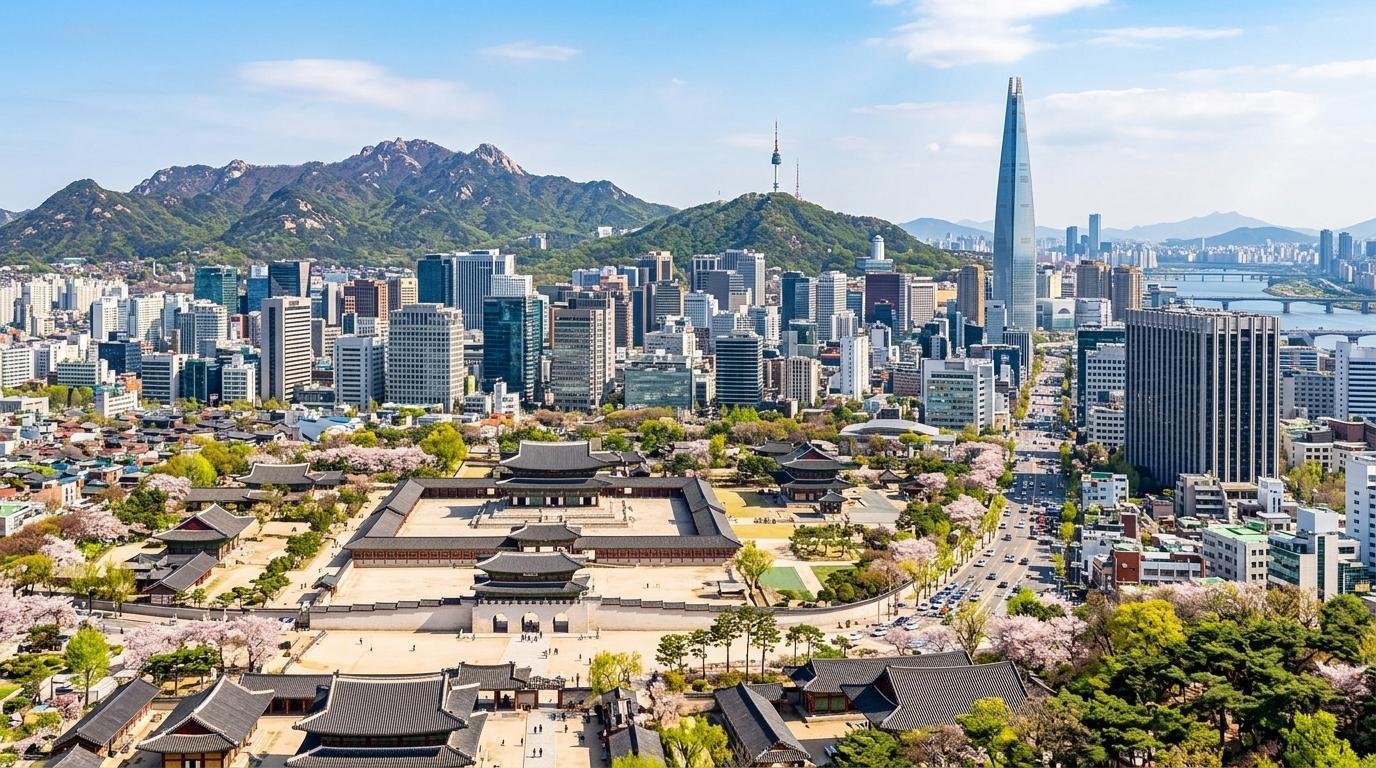
A trip to Seoul and Busan offers an excellent introduction to South Korea. The two cities have very different personalities: Seoul is a huge, energetic capital where royal palaces and traditional neighbourhoods sit alongside modern shopping, entertainment and K-culture, while Busan combines beaches, mountains, seafood markets, temples and coastal scenery.
Travelling between the two cities is also relatively straightforward, making it practical to include both in the same South Korea holiday.
Seoul is the country’s capital and a major centre for Korean culture, while Busan is a major port city known for its coastline and diverse attractions. Together, they provide a combination of history, food, shopping, culture and nature.
This Seoul and Busan travel guide covers:
- The best places to visit in Seoul
- The best things to see in Busan
- Korean food and market experiences
- Cultural activities
- Coastal and scenic attractions
- How to travel between the two cities
- A sample Seoul and Busan itinerary
- Practical tips for first-time visitors
Seoul: Where Tradition Meets Modern Korea
Seoul is a city of contrasts. Historic palaces, traditional houses and old markets can be found close to contemporary shopping districts, skyscrapers, cafés and entertainment areas.
The official Seoul tourism guide describes the city as a place where traditional culture and contemporary trends coexist, while also highlighting Seoul’s role as a centre of K-pop, K-drama, K-beauty and K-food.
For first-time visitors, it is worth dividing your time between historic Seoul and its modern neighbourhoods.
1. Gyeongbokgung Palace
Begin your Seoul sightseeing with Gyeongbokgung Palace, one of the city’s most important historic landmarks.
Built in 1395, it was the first and largest of the royal palaces constructed during the Joseon Dynasty and served as the dynasty’s main palace.
The extensive complex allows visitors to see:
- Traditional Korean palace architecture
- Royal courtyards
- Historic gates
- Gardens
- Cultural exhibitions
- The National Palace Museum of Korea
- The National Folk Museum of Korea
A visit to Gyeongbokgung can easily be combined with nearby Bukchon, Insadong and the Gwanghwamun area.
Visitors interested in Korean traditional clothing can also consider a hanbok experience. The official Seoul tourism information currently notes that visitors wearing a complete hanbok can enter the palace free of charge, subject to the applicable rules.
2. Bukchon Hanok Village
From Gyeongbokgung, continue to Bukchon Hanok Village.
The neighbourhood is known for traditional Korean houses called hanok, narrow streets, craft shops and cultural spaces.
It is a particularly good place to experience traditional Korean architecture while remaining in central Seoul.
Take time to explore:
- Traditional streets
- Craft workshops
- Small galleries
- Tea houses
- Cultural shops
- Scenic viewpoints
Remember that Bukchon is also a residential neighbourhood. Visitors should keep noise low, avoid blocking narrow streets and respect residents’ privacy.
3. Insadong
Insadong provides another opportunity to experience traditional Korean culture.
The neighbourhood is associated with:
- Traditional crafts
- Art galleries
- Korean tea
- Souvenirs
- Restaurants
- Cultural shops
It works well as part of a walking route linking Gyeongbokgung, Bukchon and other central Seoul attractions.
4. Gwanghwamun Square
Gwanghwamun is another important area for understanding Seoul’s history and modern identity.
The wider area connects several major attractions, including Gyeongbokgung Palace and historic and cultural sites.
The official Seoul tourism guide includes Gwanghwamun, Gyeongbokgung, Bukchon and Insadong among the key attractions in this central part of the city.
5. Myeongdong
After exploring historic Seoul, experience the city’s modern shopping culture in Myeongdong.
Myeongdong is known for:
- Shopping
- Korean cosmetics
- Fashion
- Restaurants
- Cafés
- Street food
- International brands
The official Seoul tourism guide describes Myeongdong as one of central Seoul’s major shopping areas, with department stores, duty-free shops, global brands and street food.
It is an especially useful stop for travellers interested in Korean beauty and shopping.
6. N Seoul Tower
For panoramic views of the capital, head to N Seoul Tower on Namsan Mountain.
The tower offers 360-degree views over Seoul and includes observation areas, restaurants, cafés and other attractions.
A visit can be particularly enjoyable around sunset, although visibility depends on weather conditions.
You can reach the area by several transport options, including the Namsan cable car.
7. Gwangjang Market
Food lovers should include Gwangjang Market in their Seoul itinerary.
The market provides an opportunity to experience Korean street food and traditional market culture.
Depending on availability, visitors can look for dishes and snacks such as:
- Gimbap
- Bindae-tteok
- Tteokbokki
- Dumplings
- Korean pancakes
- Traditional sweets
The official Seoul tourism guide specifically highlights Gwangjang Market for food such as mung bean pancakes and gimbap.
8. Hongdae
For a more youthful atmosphere, visit Hongdae.
The neighbourhood is associated with:
- Street performances
- Independent shops
- Cafés
- Restaurants
- Fashion
- Art
- Music
- Night-time entertainment
The official Seoul tourism guide describes Hongdae as an area associated with youth culture, creativity, street performances and cultural events.
It provides a useful contrast to the traditional atmosphere of Bukchon and Gyeongbokgung.
9. Gangnam
Gangnam offers another view of contemporary Seoul.
The area is known for:
- Shopping
- Restaurants
- Modern architecture
- Cafés
- Entertainment
- K-pop-related attractions
For visitors interested in contemporary Korean culture, Gangnam can be combined with COEX and other modern attractions in the area.
Busan: Beaches, Temples and Coastal Scenery
After exploring Seoul, travel south to Busan.
Busan has a very different atmosphere from the capital. Its identity is closely connected to the sea, and the city offers beaches, coastal walking routes, seafood markets, mountains and temples.
The official Visit Busan tourism site highlights routes combining Haeundae, Dongbaekseom, Haedong Yonggungsa, Songjeong and other coastal attractions.
10. Haeundae Beach
Haeundae is one of Busan’s best-known beaches and a natural starting point for exploring the city’s eastern coastline.
The area offers:
- Beach activities
- Restaurants
- Cafés
- Hotels
- Entertainment
- Coastal walks
Visit Busan also highlights the nearby Busan Aquarium and Dongbaekseom Island as part of a wider Haeundae sightseeing route.
Haeundae is particularly lively during warmer months.
Explore Dongbaekseom Island
Dongbaekseom is connected to Haeundae by a coastal walking route.
It offers a combination of:
- Ocean views
- Greenery
- Walking paths
- Coastal scenery
- City views
The area can provide a quieter break from the busy beach district.
11. Gamcheon Culture Village
Gamcheon Culture Village is one of Busan’s most recognisable neighbourhoods.
Built across steep hillsides, the area is known for colourful buildings, murals, small galleries, cafés and narrow streets.
It is a good place for:
- Photography
- Walking
- Discovering local art
- Visiting small shops
- Exploring viewpoints
Because of its steep terrain, comfortable shoes are recommended.
Allow enough time to explore without rushing through the neighbourhood.
12. Haedong Yonggungsa Temple
Haedong Yonggungsa is one of Busan’s most distinctive temples because of its coastal setting.
The temple sits beside the sea, with pathways, cliffs and ocean views surrounding the complex.
Visit Busan describes the temple as being located where the land meets the ocean and highlights its dramatic coastal scenery.
The combination of Buddhist architecture and the East Sea makes this a particularly memorable stop.
When to Visit Haedong Yonggungsa
Consider arriving earlier in the day if you want a quieter experience.
The temple can be combined with other eastern Busan attractions such as:
- Haeundae
- Songjeong Beach
- Gijang
- Coastal walking routes
13. Jagalchi Market
For a taste of Busan’s seafood culture, visit Jagalchi Market.
As one of the city’s best-known market areas, it provides an opportunity to see the importance of seafood in Busan’s food culture.
Visitors can explore:
- Fresh seafood
- Korean market food
- Restaurants
- Local produce
- Traditional market stalls
For travellers who enjoy trying regional cuisine, this is an important part of the Busan experience.
14. Gukje Market and Nampo-dong
The Nampo-dong area provides another opportunity to experience Busan’s shopping and food culture.
Explore:
- Gukje Market
- Local shops
- Street food
- Restaurants
- Yongdusan Park
- Busan Tower area
Visit Busan identifies Yongdusan Park as a major landmark in central Busan and associates it closely with the Nampo-dong area.
15. Taejongdae Park
Taejongdae Park is a scenic coastal destination on Yeongdo Island.
It combines:
- Forested areas
- Coastal cliffs
- Ocean views
- Walking routes
- Scenic viewpoints
It is a good option for travellers who want to spend some time outdoors after exploring Busan’s urban districts.
16. Songjeong Beach
Songjeong Beach provides another coastal experience in eastern Busan.
Visit Busan highlights Songjeong as a beach popular with surfers and includes it within a coastal route linking Haeundae and other eastern attractions.
The beach can be combined with:
- Jukdo Park
- Coastal walks
- Cafés
- Haedong Yonggungsa
17. Gwangalli Beach
Gwangalli is particularly known for its views of Gwangan Bridge.
The area offers:
- Beach walks
- Restaurants
- Cafés
- Night views
- Live performances
- City scenery
It is especially attractive in the evening when the bridge is illuminated.
Visit Busan recommends Gwangalli as part of its coastal sightseeing routes and highlights the combination of the beach, bridge views and local performances.
Seoul vs Busan: What Is Different?
Seoul and Busan complement each other rather than offering identical experiences.
| Seoul | Busan |
|---|---|
| Capital city | Major coastal city |
| Royal palaces | Beaches and coastal scenery |
| Shopping districts | Seafood markets |
| K-pop and contemporary culture | Coastal and outdoor experiences |
| Museums and galleries | Temples and coastal parks |
| Traditional neighbourhoods | Fishing and port-city culture |
| Dense urban environment | More ocean and mountain scenery |
A trip combining both cities therefore gives travellers a broader introduction to South Korea.
Korean Food to Try in Seoul and Busan
Food should be an important part of your itinerary.
Seoul
In Seoul, consider trying:
- Korean barbecue
- Gimbap
- Tteokbokki
- Bindae-tteok
- Korean fried chicken
- Bibimbap
- Korean desserts
- Traditional tea
Markets such as Gwangjang Market can be useful for trying several dishes in one visit.
Busan
Busan is particularly well known for seafood and coastal cuisine.
Look for:
- Fresh seafood
- Grilled fish
- Fish cakes
- Seafood soups
- Korean barbecue
- Local market snacks
Jagalchi and other market areas provide opportunities to experience local food culture.
Cultural Experiences in Seoul and Busan
A good South Korea holiday should include more than sightseeing.
Wear a Hanbok
In Seoul, consider renting traditional Korean clothing and visiting a historic palace or traditional neighbourhood.
Gyeongbokgung is particularly suited to this type of experience.
Visit a Traditional Market
Markets provide a glimpse into everyday Korean life and food culture.
Gwangjang Market in Seoul and Jagalchi Market in Busan offer very different market experiences.
Try a Korean Cooking Class
A cooking class can introduce travellers to Korean ingredients and techniques.
Depending on the provider, you may learn to prepare:
- Kimchi
- Gimbap
- Bibimbap
- Mandu
- Korean pancakes
Visit a Korean Tea House
Traditional tea houses provide a quieter experience after busy days of sightseeing.
Try Korean teas alongside traditional sweets and learn more about Korean tea culture.
Explore Korean Beauty and Shopping
Seoul is particularly well known for its beauty and cosmetics industry.
Visitors interested in Korean skincare and beauty products can explore Myeongdong and other shopping districts.
For travellers interested in beauty and wellness tourism, South Korea can also be incorporated into a broader wellness-focused itinerary.
How to Travel from Seoul to Busan
The KTX high-speed train is one of the most convenient ways to travel between Seoul and Busan.
The journey takes roughly two and a half to three hours depending on the train service and timetable.
For most travellers, rail travel offers several advantages:
- Fast journey
- Frequent services
- Central stations
- Comfortable seating
- No airport security process
- Convenient city-centre arrival
Book ahead during busy travel periods, especially around major Korean holidays.
Domestic flights are another option, but for travellers already in central Seoul, the high-speed train can be a convenient way to connect the two cities.
How Many Days Do You Need for Seoul and Busan?
5 Days
A five-day trip could be divided approximately as:
- 3 days Seoul
- 2 days Busan
This gives enough time for the major highlights without trying to cover too much.
7 Days
A seven-day holiday provides more breathing room:
- 4 days Seoul
- 3 days Busan
This allows time for cultural attractions, shopping, food experiences and coastal sightseeing.
10 Days
With ten days, travellers can slow down and add day trips or additional destinations.
A possible route is:
Seoul → Gyeongju → Busan → Seoul
Alternatively, Jeju Island could be added for travellers interested in nature and volcanic landscapes.
Sample 7-Day Seoul and Busan Itinerary
| Day | Destination | Suggested Experiences |
|---|---|---|
| Day 1 | Seoul | Arrival, Myeongdong and central Seoul |
| Day 2 | Seoul | Gyeongbokgung, Bukchon and Insadong |
| Day 3 | Seoul | Gwangjang Market, N Seoul Tower and Hongdae |
| Day 4 | Seoul → Busan | KTX journey, Haeundae and evening by the coast |
| Day 5 | Busan | Gamcheon, Jagalchi Market and Nampo-dong |
| Day 6 | Busan | Haedong Yonggungsa, Songjeong and eastern coast |
| Day 7 | Busan | Gwangalli or Taejongdae, then departure |
The exact order can be changed according to flight schedules, weather and attraction opening days.
Best Time to Visit Seoul and Busan
Both cities can be visited throughout the year, but spring and autumn are particularly comfortable for extensive sightseeing.
Spring
Spring brings flowers and generally comfortable conditions for walking.
It is a good season for:
- Palace visits
- Parks
- Cultural sightseeing
- Coastal walks
- Photography
Summer
Summer is suitable for travellers interested in:
- Beaches
- Water activities
- Festivals
- Evening entertainment
However, temperatures and humidity can be high, and periods of heavy rain are possible.
Autumn
Autumn is particularly attractive for:
- Comfortable sightseeing
- Hiking
- Photography
- Parks
- Seasonal foliage
Winter
Winter is cold, but visitors can enjoy:
- Winter scenery
- Shopping
- Indoor attractions
- Seasonal food
- Illuminations
Busan is generally milder than Seoul during winter, although temperatures can still be cold.
Practical Tips for Your Seoul and Busan Trip
Use Public Transport
Both cities have extensive public transport networks.
The subway is particularly useful for reaching major attractions, while buses can provide access to areas farther from the main subway routes.
Wear Comfortable Shoes
Both Seoul and Busan involve considerable walking.
Gamcheon, Bukchon, palace complexes and coastal areas may include hills, stairs or uneven surfaces.
Leave Time Between Attractions
Avoid scheduling attractions too closely together.
Large cities can involve significant travel time even when the distance looks short on a map.
Check Opening Hours
Palaces, museums and cultural attractions may have specific closing days or seasonal hours.
For example, the official Seoul tourism information currently lists Gyeongbokgung as closed on Tuesdays, with seasonal operating hours.
Always check current information before visiting.
Carry a Small Day Bag
Useful items include:
- Water
- Portable charger
- Umbrella
- Comfortable walking shoes
- Light jacket
- Travel documents
- Basic medication
Learn a Few Korean Phrases
Even a few basic phrases can make everyday interactions easier.
Useful expressions include:
- Annyeonghaseyo – Hello
- Gamsahamnida – Thank you
- Ne – Yes
- Aniyo – No
- Juseyo – Please
Frequently Asked Questions
Is it better to visit Seoul or Busan?
The two cities offer different experiences. Seoul is particularly strong in historic landmarks, shopping, contemporary Korean culture and urban attractions, while Busan offers beaches, coastal scenery, seafood markets and seaside temples.
Visiting both provides a broader South Korea experience.
How many days do I need for Seoul and Busan?
Seven days is a useful length for a first trip, with approximately four days in Seoul and three days in Busan. Five days can also work for travellers with limited time.
How long is the train from Seoul to Busan?
The KTX journey generally takes around two and a half to three hours, depending on the service and timetable.
What are the best places to visit in Seoul?
Gyeongbokgung Palace, Bukchon Hanok Village, Insadong, Myeongdong, Gwangjang Market, N Seoul Tower, Hongdae and Gangnam are among the city’s major attractions.
What are the best places to visit in Busan?
Haeundae Beach, Gamcheon Culture Village, Haedong Yonggungsa Temple, Jagalchi Market, Gwangalli Beach, Taejongdae Park and the Nampo-dong area are useful additions to a first-time itinerary.
Is Busan worth visiting if I have already seen Seoul?
Yes. Busan provides a noticeably different experience, with beaches, coastal landscapes, seafood markets and seaside cultural attractions.
Can I visit Seoul and Busan in one week?
Yes. A seven-day itinerary can comfortably combine both cities if the route is planned efficiently.
What food should I try in Seoul and Busan?
In Seoul, try Korean barbecue, gimbap, tteokbokki, bibimbap and market foods. In Busan, seafood, fish cakes and regional market dishes are worth exploring.
When is the best time to visit Seoul and Busan?
Spring and autumn are generally comfortable for sightseeing and outdoor activities. Summer is useful for beach experiences, while winter provides a different atmosphere and tends to be milder in Busan than Seoul.
Plan Your Seoul and Busan Holiday with GlobalLink Suisse
Seoul and Busan offer two very different perspectives on South Korea. Seoul brings together royal history, traditional neighbourhoods, shopping and contemporary Korean culture, while Busan combines beaches, seafood, temples and dramatic coastal scenery.
Combining the two cities creates a well-rounded South Korea holiday with opportunities for culture, food, shopping, relaxation and sightseeing.
Contact GlobalLink Suisse to plan a personalised Seoul and Busan journey based on your travel dates, interests, preferred experiences and available time.