
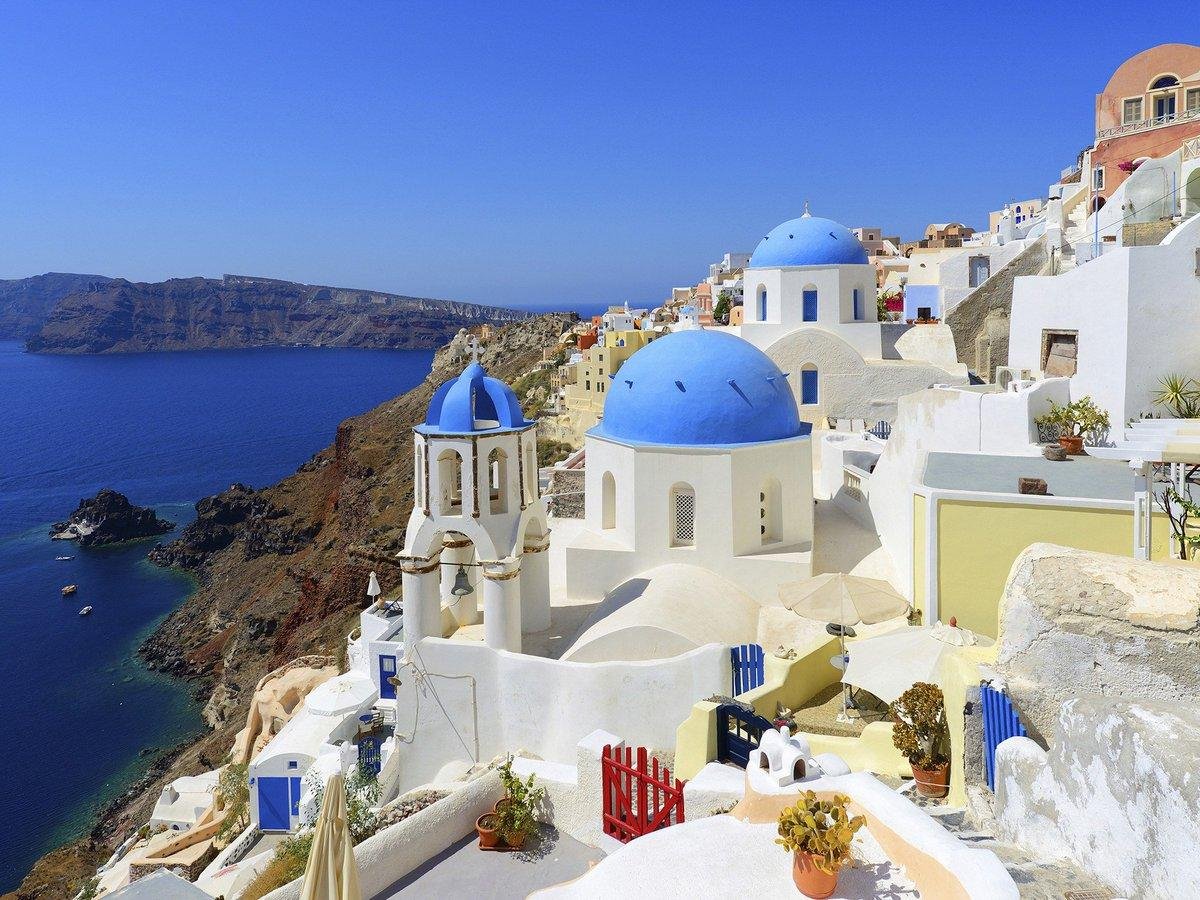
Greece is one of Europe’s most diverse travel destinations, combining ancient history, beautiful islands, Mediterranean landscapes, vibrant cities and distinctive cuisine.
For first-time travellers, however, deciding where to go can be difficult. Greece is not simply one destination. It is a country of mainland cities, archaeological sites, mountain regions and hundreds of islands, each offering a different type of travel experience.
A first visit could focus on ancient history in Athens, island scenery in Santorini, nightlife and beaches in Mykonos, or a longer combination of cultural and coastal experiences in Crete and Rhodes.
This Greece travel guide explores some of the best places to visit for first-time travellers and explains how to plan your trip around the experiences you want most.
Why Visit Greece?
Greece offers an unusually broad range of travel experiences within one country.
You can explore ancient monuments in the morning, enjoy a long Mediterranean lunch in the afternoon and watch the sunset over the Aegean in the evening.
The country’s official tourism organisation highlights its combination of beaches, mountains, traditional villages, historic monuments, religious sites, cultural experiences, gastronomy and outdoor activities.
Greece is therefore suitable for many different types of travellers, including:
- First-time European travellers
- Couples and honeymooners
- Families
- History and culture enthusiasts
- Beach lovers
- Food travellers
- Luxury travellers
- Adventure seekers
- Travellers interested in island hopping
The key is choosing destinations that match your interests rather than trying to see the whole country in one trip.
1. Athens – The Best Starting Point for First-Time Travellers
For many visitors, Athens is the natural starting point for a Greece holiday.
The capital combines ancient landmarks with a modern European city, giving first-time visitors an introduction to both historical and contemporary Greece.
Athens is home to some of the country’s most important archaeological attractions, while its neighbourhoods offer restaurants, cafés, museums, galleries, shopping and nightlife.
The city’s historic centre brings together ancient monuments, neoclassical architecture and modern urban life. Athens is also Greece’s main international gateway, with Athens International Airport providing connections to destinations across Greece and internationally.
What to see in Athens
First-time visitors should consider exploring:
- The Acropolis
- The Parthenon
- The Acropolis Museum
- Plaka
- Monastiraki
- Syntagma Square
- The Ancient Agora
- The National Archaeological Museum
- The Panathenaic Stadium
Allowing at least two or three days gives you more time to explore beyond the main archaeological attractions.
Why include Athens?
Athens works particularly well as the first or final stop on a Greece itinerary because it combines culture, history, food and convenient connections to other parts of the country.
2. Santorini – Iconic Greek Island Scenery
Santorini is arguably the most recognisable Greek island, famous for its whitewashed settlements, volcanic landscape and dramatic views across the caldera.
The island’s geography is closely connected to its volcanic history. Its distinctive caldera, cliffs and volcanic beaches give Santorini a landscape that is different from many other Greek islands.
For many first-time travellers, Santorini is particularly attractive for its combination of scenery, romantic atmosphere, food and village exploration.
Things to experience in Santorini
Consider including:
- Oia
- Fira
- Caldera viewpoints
- Sunset experiences
- Volcanic beaches
- Local food and wine experiences
- Traditional villages
- Boat excursions
Oia and Fira are particularly well known for their traditional architecture and views over the caldera.
How long should you stay?
Two to three nights can provide an introduction to Santorini, while four or more nights allow more time to explore the island at a slower pace.
3. Mykonos – Beaches, Culture and Cosmopolitan Greece
Mykonos offers a different atmosphere from Santorini.
While it also has the characteristic whitewashed Cycladic architecture, Mykonos is particularly known for its beaches, nightlife, shopping and cosmopolitan atmosphere.
The official Greek tourism site describes Mykonos as a destination combining luxury, entertainment, beaches, traditional Cycladic architecture and lively nightlife.
What to see and do in Mykonos
First-time visitors can explore:
- Mykonos Town
- Little Venice
- The famous windmills
- Traditional churches
- Beaches
- Beach clubs
- Local restaurants
- Boutiques and art spaces
Mykonos Town is particularly enjoyable to explore on foot, with narrow paved streets, whitewashed buildings and waterfront areas.
Who is Mykonos best for?
Mykonos can work particularly well for travellers interested in:
- Beach holidays
- Nightlife
- Luxury travel
- Shopping
- Romantic getaways
- Island-hopping itineraries
4. Crete – A Longer, More Diverse Greek Holiday
Crete is Greece’s largest island and is worth considering if you want more than a short island escape.
Rather than concentrating on one compact resort area, Crete offers a mixture of historic towns, beaches, mountains, villages, archaeological sites and local food experiences.
Rethymno, for example, combines a historic old town with beaches, mountains, traditional villages, archaeological attractions and Cretan cuisine.
Places to explore in Crete
Depending on your itinerary, you could include:
- Heraklion
- Chania
- Rethymno
- Knossos
- Elafonissi
- Balos
- Traditional mountain villages
- Cretan beaches
Why choose Crete?
Crete is particularly suitable if you have a week or more and want to combine:
- History
- Beaches
- Food
- Nature
- Villages
- Outdoor activities
It can also be a good choice for travellers who prefer a destination with greater variety rather than spending an entire holiday on a single resort island.
5. Rhodes – History, Beaches and Medieval Heritage
Rhodes offers another combination of history and island scenery.
The island is particularly notable for its medieval heritage. Its Medieval Town is a UNESCO World Heritage Site, while Lindos combines an ancient acropolis with a picturesque traditional settlement.
Rhodes also offers beaches, mountain landscapes, villages and seaside resorts.
Highlights of Rhodes
Consider visiting:
- Rhodes Old Town
- Palace of the Grand Master
- Lindos
- Lindos Acropolis
- Local villages
- Beaches
- Archaeological and historical sites
Rhodes is a useful choice for travellers who want an island holiday but also want substantial historical and cultural experiences.
6. Meteora – A Dramatic Mainland Experience
If your idea of Greece goes beyond beaches and islands, consider adding Meteora to your itinerary.
Meteora is famous for its enormous rock formations and monasteries built among the cliffs.
The site combines dramatic natural scenery with centuries of Orthodox Christian heritage. Meteora was added to the UNESCO World Heritage List in 1988 as a mixed cultural and natural site.
What can you experience at Meteora?
Visitors can:
- Explore the monasteries
- Enjoy panoramic viewpoints
- Walk hiking trails
- Learn about the area’s religious history
- Photograph the distinctive rock formations
- Combine the visit with other mainland destinations
Meteora is particularly worthwhile for travellers who want to experience a different side of Greece away from the famous islands.
7. Thessaloniki – Discover Northern Greece
Thessaloniki is Greece’s second-largest city and provides a different urban experience from Athens.
The city has a long history influenced by different cultures and civilisations. Its waterfront, Byzantine monuments, historic neighbourhoods, restaurants and cafés make it an interesting destination for travellers who want to explore northern Greece.
What to experience in Thessaloniki
Highlights include:
- White Tower
- Waterfront promenade
- Ano Poli
- Byzantine monuments
- Archaeological sites
- Local restaurants
- Traditional markets
- Cafés and nightlife
Thessaloniki can also serve as a base for exploring destinations elsewhere in northern Greece.
How to Choose the Best Greek Destinations
With so many destinations available, your ideal Greece itinerary depends on the type of holiday you want.
| Travel Interest | Destinations to Consider |
|---|---|
| Ancient history | Athens, Delphi, Olympia |
| Iconic island scenery | Santorini |
| Nightlife and luxury | Mykonos |
| Beaches and varied experiences | Crete |
| History and beaches | Rhodes |
| Nature and religious heritage | Meteora |
| City culture and food | Athens, Thessaloniki |
| Romantic holiday | Santorini, Mykonos, Crete |
| Family holiday | Crete, Rhodes, Athens |
| Island hopping | Santorini, Mykonos and other Cyclades islands |
These are starting points rather than strict rules. Greece has many smaller islands and mainland destinations that can provide very different experiences.
How Many Days Do You Need in Greece?
The ideal length depends on how many regions you want to visit.
5 Days in Greece
A short trip could focus on Athens and one nearby or easily connected destination.
For example:
Days 1–2: Athens
Days 3–5: Santorini
This provides a combination of ancient history and iconic island scenery.
7 Days in Greece
A week gives you more flexibility.
One possible structure is:
Days 1–3: Athens
Days 4–6: Santorini
Day 7: Return to Athens or departure
Alternatively, you could spend the full week exploring Crete.
10 Days in Greece
Ten days allows a more balanced combination of mainland and island experiences.
For example:
Days 1–3: Athens
Days 4–6: Santorini
Days 7–10: Crete
Another option is to combine Athens with Mykonos and Santorini.
14 Days in Greece
Two weeks gives you enough time to create a broader itinerary without trying to visit too many destinations in a short period.
A possible itinerary could include:
Athens → Mykonos → Santorini → Crete
Alternatively, travellers interested in history could incorporate destinations such as Meteora or Delphi.
Best Time to Visit Greece
Greece can be visited throughout much of the year, but the best time depends on what you want to experience.
Spring
Spring can be attractive for sightseeing, cultural travel and outdoor activities.
Temperatures are generally more comfortable than during the hottest part of summer, while landscapes can be particularly appealing.
Summer
Summer is the traditional high season for Greek island holidays.
It is particularly suitable for travellers focused on:
- Beaches
- Swimming
- Island hopping
- Boat trips
- Outdoor dining
- Nightlife
Popular destinations can become busy during peak summer periods, so accommodation and transportation should be planned in advance.
Autumn
Autumn can provide a combination of warm weather and more comfortable sightseeing conditions.
It can be particularly appealing for travellers who want to combine beaches with cultural and historical exploration.
Winter
Winter offers a different experience of Greece.
The islands can be much quieter, while mainland cities such as Athens and Thessaloniki continue to offer museums, restaurants, historical attractions and cultural activities.
Greek Food You Should Try
Food is an important part of travelling through Greece.
Depending on where you travel, you may encounter different regional dishes and ingredients.
Some foods worth looking for include:
- Moussaka
- Souvlaki
- Greek salad
- Tzatziki
- Fresh seafood
- Grilled meats
- Greek yoghurt
- Baklava
- Local cheeses
- Olive-based dishes
Do not limit yourself to restaurants in the most tourist-heavy areas. Exploring local tavernas, markets and neighbourhood restaurants can add another dimension to your Greece holiday.
Greece’s official tourism resources highlight gastronomy as an important part of the country’s travel experience, alongside culture, nature, beaches and local traditions.
Getting Around Greece
Getting around Greece usually involves a combination of flights, ferries, road travel and public transport.
Athens is an important transport hub, with its international airport connecting the capital to destinations within Greece and abroad.
For island travel, ferries are an important part of the transport network, although domestic flights can also be useful when distances are greater or time is limited.
When planning an itinerary, consider travel time between destinations rather than simply counting the number of places you can fit into your schedule.
A slower itinerary can often provide a more enjoyable holiday than trying to visit too many islands.
Practical Tips for First-Time Travellers to Greece
1. Don’t try to see everything
Greece is too diverse to experience fully in one trip.
Choose two or three destinations that complement one another.
2. Book popular destinations early
Santorini and Mykonos can be particularly busy during peak travel periods.
Planning accommodation and transportation early can give you more choice.
3. Allow time for travel between islands
Island hopping looks simple on a map, but ferry schedules and travel times need to be considered when building your itinerary.
4. Mix famous attractions with local experiences
The Acropolis, Santorini and Mykonos are famous for good reason, but Greece also has smaller towns, villages, archaeological sites, markets and natural landscapes worth exploring.
5. Check current travel information
Before departure, check official travel guidance, transportation information and entry requirements relevant to your nationality.
The official Visit Greece website provides travel tips and practical information for visitors, including transportation and travel planning resources.
6. Pack for walking
Many Greek destinations involve walking on cobbled streets, archaeological sites, steps and uneven surfaces.
Comfortable footwear can make a significant difference.
A Sample First-Time Greece Itinerary
If you are visiting Greece for the first time and have around 10 days, one possible itinerary is:
Days 1–3: Athens
Explore the Acropolis, historic centre, museums, Plaka and local food scene.
Days 4–6: Santorini
Experience Oia, Fira, the caldera, volcanic landscapes and local cuisine.
Days 7–10: Crete
Explore one or two bases in Crete, combining beaches, historic sites, food and local villages.
This itinerary gives first-time visitors a mixture of ancient history, iconic island scenery and a more extensive Greek island experience.
For travellers who prefer nightlife and luxury, Mykonos could replace Crete. For travellers more interested in history and mainland Greece, Meteora could be added instead.
Is Greece Good for a First International Holiday?
Greece can work particularly well for first-time international travellers because a single trip can introduce you to several different types of travel experience.
You can experience:
- Ancient history
- European city life
- Island beaches
- Mediterranean cuisine
- Traditional villages
- Religious heritage
- Luxury resorts
- Outdoor activities
- Local culture
The most important planning decision is not simply choosing the “best” destination. It is deciding what kind of Greek holiday you want.
A traveller interested in history may prioritise Athens and Meteora. A couple may focus on Santorini. A beach and nightlife holiday could include Mykonos. A family or longer holiday may benefit from the variety of Crete or Rhodes.
Frequently Asked Questions About Travelling to Greece
What are the best places to visit in Greece for first-time travellers?
Athens, Santorini, Mykonos, Crete and Rhodes are among the destinations commonly considered for a first Greece trip. Meteora and Thessaloniki are also worthwhile for travellers interested in mainland culture, history and different landscapes.
How many days should I spend in Greece?
Seven to ten days is a useful starting point for a first visit, although two weeks allows a broader itinerary. The number of days you need depends on how many destinations you want to combine.
Is Athens worth visiting?
Yes. Athens provides access to some of Greece’s most important archaeological and cultural attractions and is also the country’s main international gateway.
Is Santorini suitable for first-time visitors?
Yes. Santorini is particularly suited to travellers interested in dramatic scenery, caldera views, traditional architecture, food and romantic experiences.
Is Mykonos only for nightlife?
No. Although Mykonos is known for nightlife and its cosmopolitan atmosphere, it also offers beaches, traditional Cycladic architecture, cultural attractions, restaurants, shopping and scenic areas.
Which Greek island is best for a longer holiday?
Crete is a strong option for travellers who want variety, with historic towns, beaches, mountains, villages, food and cultural attractions available across the island.
Can I visit Greece in winter?
Yes. Greece remains a year-round destination, although the experience is different from the traditional summer island holiday. Mainland cities and cultural attractions can still be explored, while some seasonal island businesses operate differently outside the main tourist season.
Is Greece suitable for families?
Yes. Greece offers a wide range of experiences suitable for families, including beaches, cultural attractions, outdoor activities and family-friendly destinations. The ideal location depends on the children’s ages and the type of holiday planned.
Plan Your Greece Holiday with GlobalLink Suisse
Planning a Greece holiday becomes easier when your itinerary is built around your interests, available time and preferred travel style.
Whether you want to explore ancient Athens, experience the scenery of Santorini, discover the cosmopolitan atmosphere of Mykonos, relax on the beaches of Crete or combine several Greek destinations into one journey, a well-planned itinerary can help you make the most of your time.
Ready to explore Greece? Contact GlobalLink Suisse to start planning your Greece travel experience.