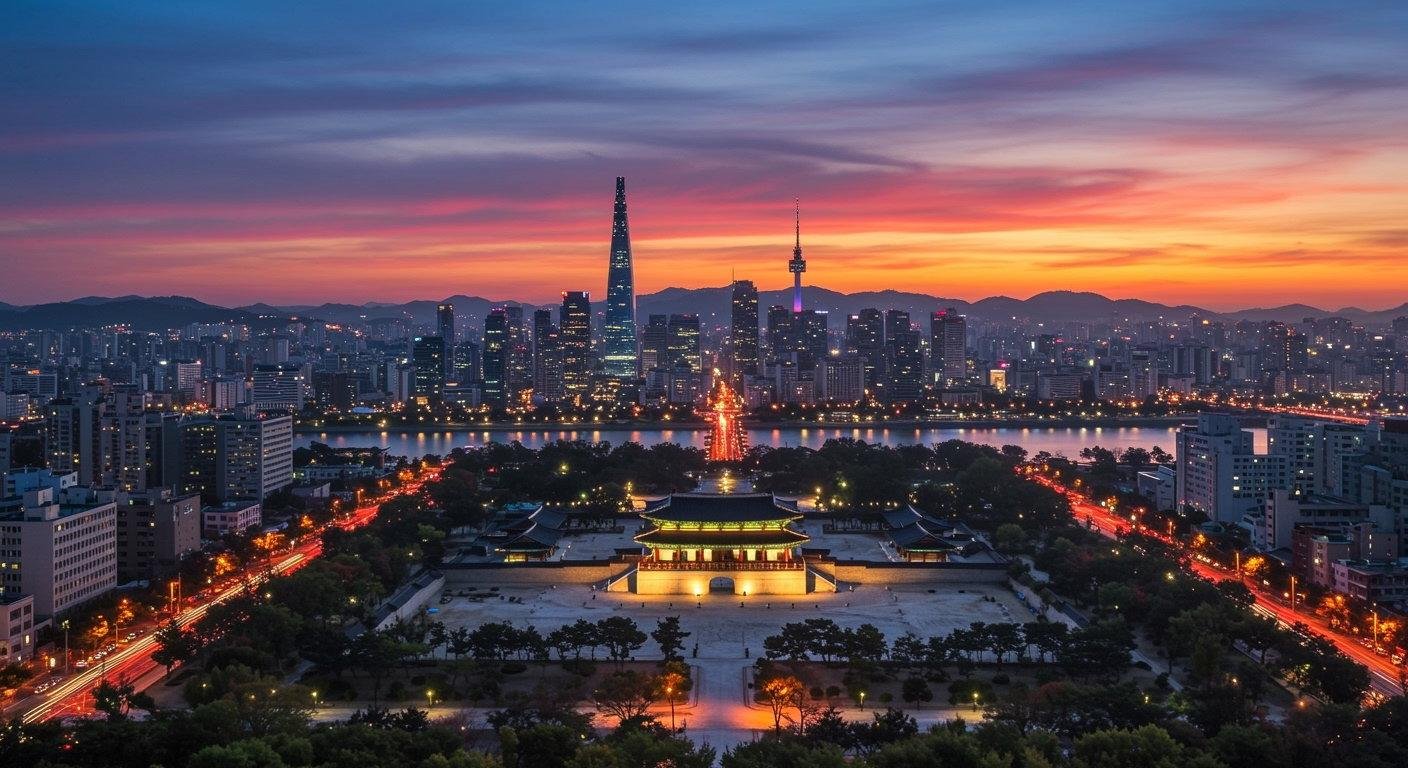
South Korea offers travellers a fascinating combination of ancient heritage and contemporary culture. Royal palaces stand among modern skyscrapers, traditional markets operate alongside fashionable shopping districts, and historic Korean houses have been transformed into cafés, galleries and cultural spaces.
Food is another important part of the experience. Korean cuisine includes regional specialities, fermented foods, traditional dishes, street food and modern interpretations of Korean cooking. Practices such as kimjang and jang-making also demonstrate how food traditions are connected to family, community and cultural identity. UNESCO has recognised both kimjang and jang-making as intangible cultural heritage.
At the same time, contemporary South Korea has become globally influential through K-pop, Korean dramas, beauty, fashion, design and digital culture. The result is a destination where visitors can experience centuries of history and some of Asia’s most dynamic modern cities during the same holiday.
This South Korea cultural travel guide explores:
- Korean food and culinary traditions
- Royal palaces and historic heritage
- Traditional villages and architecture
- Gyeongju’s ancient history
- Busan’s coastal culture
- Seoul’s modern city life
- Korean arts, crafts and traditions
- K-pop, K-beauty and contemporary Korean culture
- Practical ways to experience Korean culture as a visitor
Understanding Korean Culture
Korean culture has developed over many centuries and has been shaped by different historical periods, philosophies, religions, artistic traditions and regional communities.
For travellers, some of the most visible elements include:
- Korean food
- Hanbok
- Hangul
- Traditional architecture
- Buddhist temples
- Confucian heritage
- Royal palaces
- Traditional markets
- Ceramics and crafts
- Festivals
- Contemporary music and entertainment
One of the most interesting aspects of travelling in South Korea is seeing how these traditions continue to exist within a highly modern society.
A traditional hanok neighbourhood can be only a short walk from a contemporary shopping district. A historic palace can sit beneath a skyline of modern buildings. Traditional food is served in both family restaurants and contemporary dining establishments.
Korea Tourism Organization similarly describes Seoul as a city where its historic past and contemporary trends coexist, with palaces, traditional neighbourhoods, K-culture, shopping and modern technology all forming part of the visitor experience.
Korean Food Culture: An Essential Part of the Journey
Food is one of the best ways to understand South Korea.
Korean cuisine goes far beyond the dishes that have become popular internationally. Different regions have their own specialities, ingredients and food traditions.
Korea Tourism Organization’s current food guide highlights 33 regional specialities, seasonal ingredients and traditional beverages as part of its K-Local Food Trip initiative.
Kimchi and Kimjang
Kimchi is one of the most recognisable elements of Korean cuisine.
It generally consists of vegetables that are seasoned and fermented, with many different varieties and recipes.
But kimchi is also connected to a wider cultural tradition known as kimjang — the collective practice of making and sharing kimchi.
UNESCO inscribed kimjang on its Representative List of the Intangible Cultural Heritage of Humanity in 2013. The organisation notes that the practice reinforces Korean identity and encourages cooperation within families and communities.
For visitors, this means that tasting kimchi is only one way of encountering the tradition. A cooking or cultural workshop can provide a deeper understanding of how fermented foods are prepared and shared.
Jang: The Foundation of Korean Flavours
Another important element of Korean food culture is jang, referring to fermented sauces such as:
- Soybean paste
- Soy sauce
- Red chilli paste
UNESCO inscribed knowledge, beliefs and practices related to jang-making in 2024. The tradition includes preparing ingredients, fermentation, ageing and storage, with recipes and practices often passed between generations.
These sauces contribute distinctive flavours to many Korean dishes.
Korean Barbecue
Korean barbecue is one of the most interactive dining experiences available to visitors.
Depending on the restaurant, diners may cook meat at the table and eat it with vegetables, sauces and side dishes.
The experience is as much about the shared meal as the individual dish.
Bibimbap
Bibimbap combines rice with vegetables and other ingredients, often accompanied by an egg and a spicy sauce.
Regional variations exist, and travellers can encounter different interpretations throughout the country.
Jeonju is particularly associated with bibimbap and is a useful destination for travellers interested in Korean food culture.
Gimbap
Gimbap consists of rice and other ingredients rolled in seaweed.
It is convenient, affordable and widely available, making it an easy food to try during a busy day of sightseeing.
Tteokbokki
Tteokbokki is a popular Korean street food made using rice cakes, traditionally served in a spicy sauce.
It is commonly found at markets and casual food stalls.
Korean Street Food
Traditional markets are excellent places to explore Korean food culture.
Depending on the destination, visitors may encounter:
- Tteokbokki
- Gimbap
- Korean pancakes
- Dumplings
- Fish cakes
- Hotteok
- Fried snacks
- Traditional sweets
Korea Tourism Organization’s food resources highlight everything from royal cuisine to street foods and traditional drinks and desserts.
Seoul: Where Korean Heritage Meets Modern City Life
Seoul is perhaps the clearest example of the relationship between old and new Korea.
The city has been Korea’s central capital since the Joseon period, and historic palaces remain integrated into the modern urban landscape.
A cultural itinerary should therefore combine historic attractions with contemporary neighbourhoods.
Gyeongbokgung Palace
Gyeongbokgung was the main palace of the Joseon dynasty and remains one of Seoul’s most important heritage sites.
The complex offers visitors an opportunity to see:
- Royal architecture
- Palace gates
- Courtyards
- Gardens
- Historic ceremonial spaces
- Traditional Korean design
Korea Tourism Organization currently features Gyeongbokgung as part of a cultural walking route that also includes the National Folk Museum and Bukchon Hanok Village.
Changdeokgung Palace
Changdeokgung is another major royal palace and is particularly known for its garden.
Its architecture and landscaped grounds provide insight into the relationship between Korean royal life and nature.
The palace complex and its garden are recognised as a UNESCO World Heritage Site.
Bukchon Hanok Village
Bukchon provides one of the best-known examples of traditional Korean urban architecture in Seoul.
The neighbourhood contains traditional hanok houses, but it is also a living residential community.
Korea Tourism Organization specifically advises visitors to practise “silent tourism” in Bukchon by keeping noise to a minimum.
This is an important reminder that cultural tourism should respect the communities that preserve these historic environments.
Insadong
Insadong is associated with Korean crafts, art, traditional tea and cultural shopping.
It is a useful destination for travellers who want to purchase:
- Traditional crafts
- Ceramics
- Artwork
- Tea
- Souvenirs
- Korean-designed products
Ikseon-dong
Ikseon-dong demonstrates how traditional architecture can be adapted to modern urban life.
Historic-style hanok buildings now accommodate cafés, restaurants and contemporary businesses.
Korea Tourism Organization includes Ikseon-dong, Insadong, Bukchon and historic palaces together in a suggested cultural route, highlighting the way traditional and modern experiences can coexist within the same neighbourhoods.
Gyeongju: Korea’s Ancient Cultural Heart
For travellers particularly interested in heritage, Gyeongju deserves a prominent place on a South Korea itinerary.
Gyeongju was the capital of the Silla Kingdom for around a thousand years and is often described as a “museum without walls.”
The city contains temples, ancient tombs, historic architecture, traditional villages and archaeological remains.
Korea Tourism Organization identifies several major World Heritage sites in and around Gyeongju, including Bulguksa Temple, Seokguram Grotto, the Gyeongju Historic Area and Yangdong Village.
Bulguksa Temple
Bulguksa is one of Korea’s best-known Buddhist heritage sites.
The temple demonstrates the craftsmanship and architectural traditions of the Silla period.
Visitors can explore:
- Temple buildings
- Stone pagodas
- Courtyards
- Buddhist artwork
- Surrounding mountain scenery
Seokguram Grotto
Seokguram Grotto is an important Buddhist heritage site located in the mountains above Gyeongju.
Its granite sculpture and architectural setting make it one of the region’s most significant cultural attractions.
Daereungwon Ancient Tomb Complex
Daereungwon contains large ancient burial mounds associated with the Silla royal and aristocratic tradition.
The grassy tombs create a distinctive landscape within the modern city.
Donggung Palace and Wolji Pond
Donggung Palace and Wolji Pond is particularly atmospheric in the evening.
The historic structures and pond are illuminated after dark, creating reflections across the water.
Yangdong Village
Yangdong Village provides another perspective on Korean heritage through traditional houses and historic community life.
The UNESCO World Heritage site allows visitors to explore traditional architecture in a village setting rather than only within major urban centres.
Busan: Coastal Culture and Modern Korea
Busan provides a different cultural experience from Seoul and Gyeongju.
As a major port city, its identity is closely connected with the sea, seafood, markets and coastal communities.
At the same time, Busan has become a modern urban centre with contemporary architecture, cafés, entertainment and creative neighbourhoods.
Jagalchi Market
Jagalchi is closely associated with Busan’s seafood culture.
A visit provides an opportunity to see how the city’s relationship with the sea influences its food and everyday life.
Travellers can explore market stalls, restaurants and seafood displays while experiencing a different side of Korean urban culture.
Gamcheon Culture Village
Gamcheon Culture Village is known for its colourful hillside buildings, murals, small galleries and narrow streets.
The area demonstrates how older urban neighbourhoods can be transformed into cultural and artistic destinations.
Haedong Yonggungsa
Haedong Yonggungsa is a Buddhist temple located beside the sea.
Its combination of traditional architecture and coastal scenery makes it particularly distinctive.
Haeundae
Haeundae represents Busan’s modern coastal lifestyle.
The area combines:
- Beach culture
- Hotels
- Restaurants
- Cafés
- Entertainment
- Contemporary architecture
This contrast between seaside leisure and historic temples illustrates the diversity of Busan.
Hanbok: Traditional Korean Clothing
The hanbok is one of the most recognisable elements of Korean cultural heritage.
Traditional garments are characterised by distinctive shapes, colours and flowing lines.
Today, hanbok is still worn for special occasions, ceremonies and cultural activities, while modern adaptations have also become popular.
Korea Tourism Organization notes that contemporary hanbok continues to combine traditional identity with modern sensibilities.
Trying a Hanbok Experience
Visitors can rent hanbok in several tourist areas, particularly around Seoul’s historic palaces.
A cultural experience may include:
- Selecting traditional clothing
- Learning how the garments are worn
- Visiting a palace or historic district
- Taking photographs
- Learning about traditional Korean dress
It is important to treat the clothing respectfully and follow the provider’s instructions.
Korean Tea and Traditional Drinks
Tea culture offers a quieter way to experience Korea.
Traditional tea houses can be found in areas such as Insadong, Bukchon and other historic neighbourhoods.
Visitors may encounter:
- Korean green tea
- Traditional herbal teas
- Seasonal drinks
- Traditional sweets
A tea-house visit can be combined with a walk through a hanok neighbourhood.
Korean drinking culture also includes traditional alcoholic beverages such as makgeolli and soju. Travellers should observe local laws and age requirements when consuming alcohol.
Traditional Korean Arts and Crafts
South Korea has a long history of craftsmanship.
Depending on the destination, travellers can explore:
- Ceramics
- Metalwork
- Traditional paper
- Woodwork
- Textiles
- Calligraphy
- Embroidery
- Lacquerware
A workshop is often more memorable than simply purchasing a finished souvenir.
Visitors may be able to participate in activities such as:
- Pottery
- Calligraphy
- Paper crafts
- Traditional painting
- Cooking
- Jewellery or craft-making
Availability varies by destination and season.
Korean Markets and Everyday Life
Traditional markets provide an opportunity to see Korean culture outside major tourist attractions.
Markets combine food, shopping and social interaction and can be particularly useful for travellers interested in everyday Korean life.
Gwangjang Market in Seoul
Gwangjang Market is one of Seoul’s best-known traditional markets and is particularly popular for food.
It can be combined with a cultural walking itinerary through central Seoul.
Jagalchi Market in Busan
Jagalchi provides a very different experience, centred around Busan’s coastal and seafood culture.
Gyeongju Markets
Gyeongju’s traditional markets provide opportunities to experience regional food and local shopping.
Korea Tourism Organization’s current Gyeongju cultural guide highlights Seongdong Market and Jungang Market, including regional foods and street-food favourites.
Modern Korean City Life
South Korea’s cultural identity is not limited to its historical heritage.
Modern Korean culture has become internationally influential through:
- K-pop
- Korean dramas
- Korean cinema
- K-beauty
- Korean fashion
- Digital technology
- Contemporary design
- Cafés and food culture
K-Pop and Music
K-pop has become one of the most visible aspects of contemporary Korean culture.
Visitors can explore music-related experiences in Seoul through:
- Entertainment districts
- Music shops
- Concerts
- Pop-up events
- K-pop exhibitions
- Dance experiences
Event availability changes frequently, so check current schedules before travelling.
K-Drama and Film Culture
Korean television and cinema have introduced international audiences to Korean cities, food, fashion and everyday life.
Visitors may recognise locations from popular productions while exploring Seoul and other destinations.
Film and drama-related exhibitions and events also appear periodically.
K-Beauty
Korean beauty culture is another major part of contemporary Korean city life.
Seoul is particularly well known for:
- Skincare
- Cosmetics
- Beauty shops
- Dermatology and aesthetic services
- Beauty cafés and experiences
Visitors interested in beauty tourism should distinguish between ordinary cosmetic shopping and medical or aesthetic treatment, which requires appropriate professional consultation and careful provider research.
Cafés and Contemporary Design
Seoul’s café culture is another expression of modern Korean lifestyle.
Traditional neighbourhoods now contain cafés inside renovated hanok buildings, while newer districts feature highly contemporary interiors.
This creates a particularly Korean combination of heritage architecture and modern design.
How Food Connects Traditional and Modern Korea
One of the most interesting aspects of Korean culture is how traditional food continues to evolve.
A visitor might eat a centuries-old fermented food at a modern restaurant, try traditional tea in a renovated hanok or find regional dishes presented using contemporary techniques.
Korea Tourism Organization’s food guide specifically presents Korean cuisine as spanning royal cuisine, regional specialities, traditional drinks, desserts and modern street-food culture.
This makes food one of the easiest ways to understand both historic and contemporary Korea.
Best Destinations for a Korean Cultural Holiday
Seoul
Best for:
- Royal palaces
- Hanok villages
- Markets
- Shopping
- K-culture
- Museums
- Modern city life
Gyeongju
Best for:
- Ancient Korean history
- Buddhist heritage
- Silla culture
- Archaeological sites
- Traditional villages
Busan
Best for:
- Coastal culture
- Seafood
- Markets
- Beaches
- Seaside temples
- Modern urban experiences
Jeonju
Best for:
- Hanok architecture
- Traditional food
- Bibimbap
- Crafts
- Cultural experiences
Jeju Island
Best for:
- Natural heritage
- Coastal landscapes
- Local traditions
- Haenyeo culture
- Volcanic scenery
A Sample 10-Day South Korea Cultural Itinerary
For travellers wanting to combine heritage, food and contemporary city life, a route such as the following can work well:
| Day | Destination | Cultural Experiences |
|---|---|---|
| Day 1 | Seoul | Arrival and modern Seoul |
| Day 2 | Seoul | Gyeongbokgung, Bukchon and Insadong |
| Day 3 | Seoul | Changdeokgung, Ikseon-dong and Gwangjang Market |
| Day 4 | Seoul | K-beauty, shopping and contemporary Seoul |
| Day 5 | Seoul → Gyeongju | Travel and evening heritage sightseeing |
| Day 6 | Gyeongju | Bulguksa, Daereungwon and Donggung Palace |
| Day 7 | Gyeongju → Busan | Markets and coastal Busan |
| Day 8 | Busan | Haedong Yonggungsa and Haeundae |
| Day 9 | Busan | Gamcheon and Jagalchi Market |
| Day 10 | Busan | Final cultural experiences and departure |
The route can be extended with Jeonju or Jeju Island for travellers who have more time.
Korea Tourism Organization currently publishes multi-city itineraries combining Seoul, Gyeongju, Busan, Jeonju and other destinations, reflecting how these cities can be connected into broader cultural journeys.
Tips for Experiencing South Korea’s Culture Respectfully
Respect Residential Heritage Areas
Places such as Bukchon are not simply tourist attractions. People live there.
Keep noise low, avoid entering private areas and follow local signs.
Follow Rules at Temples and Palaces
Observe photography restrictions and avoid disturbing worshippers or ceremonies.
Try Local Food
Instead of relying only on familiar international restaurants, try regional Korean dishes and traditional markets.
Take Part in Cultural Activities
A cooking class, tea experience, craft workshop or hanbok experience can provide more insight than simply photographing landmarks.
Learn Basic Korean Expressions
A few simple phrases can make interactions more enjoyable.
Useful expressions include:
- Annyeonghaseyo — Hello
- Gamsahamnida — Thank you
- Juseyo — Please
- Ne — Yes
- Aniyo — No
Allow Time to Explore
Some of the best cultural experiences happen while walking between major attractions, visiting a small market, sitting in a café or discovering a local neighbourhood.
Frequently Asked Questions
What is South Korea best known for culturally?
South Korea is known for its food, traditional architecture, royal heritage, Buddhist temples, hanbok, Hangul, crafts, festivals and contemporary cultural exports such as K-pop, Korean dramas, film and beauty.
Which city is best for Korean cultural experiences?
Seoul provides the widest combination of traditional and contemporary experiences. Gyeongju is particularly important for ancient heritage, while Busan offers distinctive coastal and food culture.
What Korean foods should I try?
Try kimchi, bibimbap, Korean barbecue, gimbap, tteokbokki, Korean pancakes, regional specialities and traditional Korean teas.
What is kimjang?
Kimjang is the traditional collective practice of making and sharing kimchi. UNESCO inscribed it on the Representative List of the Intangible Cultural Heritage of Humanity in 2013.
Why is Gyeongju important?
Gyeongju was the capital of the Silla Kingdom for around a thousand years and contains major historic sites including Bulguksa, Seokguram, ancient tombs and the Gyeongju Historic Area.
Can tourists wear hanbok?
Yes. Hanbok rental and cultural experiences are available in several tourist areas, particularly around Seoul’s historic palaces. Specific admission arrangements and rental conditions vary.
Where can I experience modern Korean culture?
Seoul is particularly suitable for experiencing K-pop, Korean fashion, beauty, cafés, contemporary design, shopping and entertainment alongside historic attractions.
Is Korean food very spicy?
Some Korean dishes are spicy, but not all. Travellers can find many mild dishes, soups, grilled foods, noodles, rice dishes and desserts. If you have a low tolerance for spice, ask about the level before ordering.
Experience South Korea with GlobalLink Suisse
South Korea’s greatest cultural attraction is the way its past and present exist together. You can begin the morning inside a centuries-old palace, enjoy traditional Korean food for lunch, explore a historic hanok neighbourhood in the afternoon and finish the evening surrounded by the lights of a modern Asian city.
From Seoul’s palaces and markets to Gyeongju’s ancient heritage and Busan’s coastal culture, a carefully planned journey can reveal very different sides of Korea.
Contact GlobalLink Suisse to plan a personalised South Korea cultural journey combining heritage, food, local experiences and modern Korean city life.