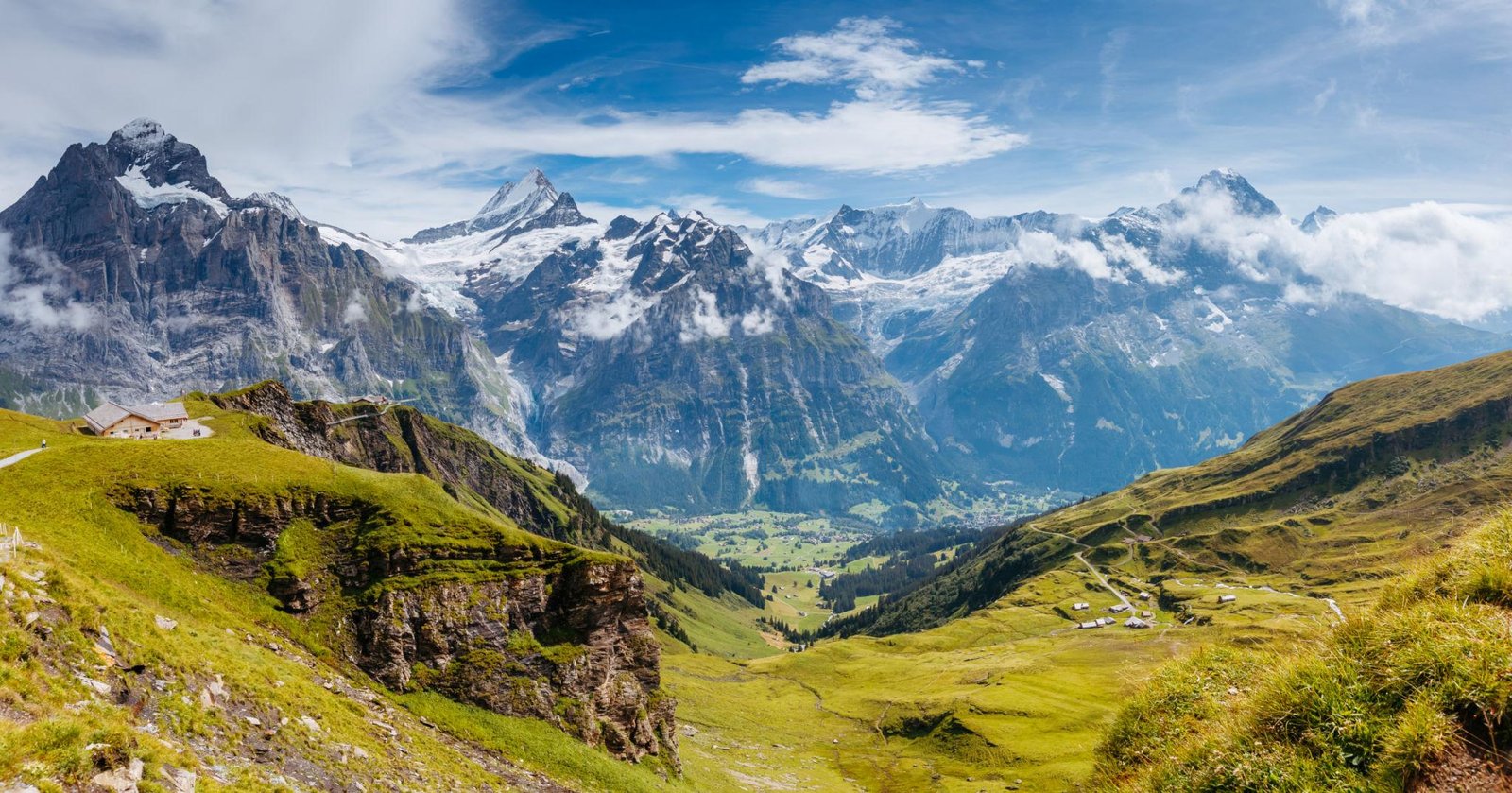
The Swiss Alps are among Europe’s most spectacular mountain regions, offering dramatic peaks, green valleys, glaciers, Alpine villages, scenic railways and unforgettable outdoor experiences. Whether you are visiting Switzerland for the first time or returning for a deeper exploration, the Alps provide something for every type of traveller.
You can enjoy panoramic mountain views without strenuous hiking, explore traditional villages, take a scenic train journey, discover glacier landscapes or spend several days skiing and hiking in an Alpine resort.
However, the Swiss Alps are not one single destination. They cover a wide area, with different regions offering distinct landscapes and experiences. Choosing the right base is therefore an important part of planning your trip.
This Swiss Alps travel guide explores the best destinations, activities and practical tips for creating a memorable mountain holiday.
Why Visit the Swiss Alps?
The Swiss Alps combine natural scenery with excellent transport infrastructure and well-developed tourism facilities. Many mountain destinations can be reached by train, cable car, funicular, gondola or mountain railway.
Some of the main reasons to visit include:
- Spectacular mountain panoramas
- Alpine villages and traditional architecture
- Glaciers, waterfalls and mountain lakes
- Hiking and walking trails
- Skiing and snowboarding
- Scenic railway journeys
- Cable-car and funicular experiences
- Local food and mountain restaurants
- Wellness and relaxation in Alpine resorts
- Family-friendly mountain excursions
- Photography and nature experiences
The Alps are suitable for both active and relaxed holidays. You can spend a day hiking through mountain meadows or simply enjoy panoramic views from a mountain restaurant.
Understanding the Main Swiss Alps Regions
The Swiss Alps extend across several regions of the country. Each has its own character, attractions and travel possibilities.
The most popular areas for visitors include:
- Bernese Oberland
- Valais
- Central Switzerland
- Graubünden
- Engadin
- The regions around the Jungfrau mountains
- The areas surrounding the Matterhorn
For first-time visitors, the Bernese Oberland, Central Switzerland and Valais are especially useful starting points.
Best Swiss Alps Destinations
1. Interlaken
Interlaken is one of the most popular bases for exploring the Swiss Alps. It is located between Lake Thun and Lake Brienz and provides access to several mountain destinations in the Bernese Oberland.
Interlaken is particularly suitable for travellers who want a combination of:
- Mountain excursions
- Lake scenery
- Outdoor activities
- Scenic rail journeys
- Alpine villages
- Adventure experiences
From Interlaken, visitors can explore destinations such as Lauterbrunnen, Grindelwald, Wengen and Mürren.
The town itself is also a convenient place to find accommodation, restaurants, shops and transport connections.
2. Grindelwald
Grindelwald is a picturesque Alpine village surrounded by impressive mountain scenery. It is a popular destination for visitors interested in hiking, cable-car excursions, winter sports and panoramic views.
Possible experiences include:
- Exploring the village
- Taking mountain lifts
- Hiking through Alpine landscapes
- Visiting viewpoints
- Enjoying mountain restaurants
- Participating in seasonal outdoor activities
Grindelwald is a strong choice for travellers who want a classic Swiss mountain setting with convenient access to mountain experiences.
3. Lauterbrunnen
Lauterbrunnen is famous for its dramatic valley, waterfalls and steep mountain walls. It is one of the most recognisable landscapes in the Swiss Alps.
Visitors can enjoy:
- Valley walks
- Waterfall viewpoints
- Photography
- Village exploration
- Mountain excursions
- Connections to Wengen and Mürren
Lauterbrunnen is particularly attractive during the warmer months when walking routes and surrounding landscapes are accessible. However, conditions vary with the season, and mountain weather can change quickly.
4. Wengen
Wengen is a traditional mountain village in the Jungfrau region. It is known for its scenic location, mountain views and car-free village atmosphere.
It can be a good choice for travellers seeking:
- A peaceful Alpine setting
- Mountain walks
- Winter sports
- Panoramic views
- Traditional village experiences
- A slower-paced holiday
Wengen is reached by mountain railway, making the journey itself part of the experience.
5. Mürren
Mürren is another scenic mountain village in the Bernese Oberland. Its elevated position provides impressive views of the surrounding peaks.
The village is suitable for:
- Hiking
- Winter activities
- Mountain photography
- Scenic walks
- Traditional Alpine experiences
- Excursions towards the Schilthorn area
Mürren offers a different atmosphere from larger tourist bases and may appeal to travellers who prefer smaller mountain communities.
6. Jungfraujoch
Jungfraujoch is one of Switzerland’s best-known high-altitude attractions. Often associated with the phrase “Top of Europe,” it provides access to a dramatic mountain environment with snow, ice and panoramic views.
A visit may include:
- Mountain railway travel
- High-altitude viewpoints
- Glacier and snow scenery
- Indoor visitor attractions
- Alpine photography
- Views of the surrounding peaks
Because of its altitude, visitors should consider weather conditions and their own comfort. The experience may not be suitable for everyone, particularly those who are sensitive to high elevations.
It is wise to allow sufficient time for the journey and to check operating conditions before travelling.
7. Zermatt
Zermatt is one of the most famous mountain resorts in Switzerland and is closely associated with the Matterhorn.
The village offers a combination of:
- Mountain scenery
- Hiking
- Skiing
- Scenic railways
- Mountain viewpoints
- Restaurants and Alpine accommodation
- Seasonal outdoor experiences
Zermatt is a good choice for travellers who want a dedicated mountain-resort experience. Since reaching the destination requires planning, it is generally better to stay for at least two nights rather than treating it as a rushed stop.
8. Matterhorn
The Matterhorn is one of Switzerland’s most recognisable landmarks. Its distinctive pyramid-shaped profile attracts visitors throughout the year.
Travellers can enjoy views of the mountain from various viewpoints around Zermatt and the surrounding region.
Popular ways to experience the Matterhorn include:
- Scenic mountain railways
- Cable-car excursions
- Hiking viewpoints
- Photography
- Winter sports
- Village walks
Visibility depends heavily on weather. A cloudy day may limit views, so keeping some flexibility in your schedule can be useful.
9. Lucerne and Central Switzerland
Although Lucerne is a lakeside city rather than a mountain village, it is an excellent base for Alpine excursions.
From Lucerne, travellers can explore:
- Mount Pilatus
- Mount Rigi
- Mount Titlis
- Lake Lucerne
- Scenic mountain railways
- Cable-car routes
- Lakeside villages
Lucerne is ideal for visitors who want to combine historic city sightseeing with mountain experiences. It can also be a convenient choice for families and travellers who prefer to stay in a larger town.
10. Mount Titlis
Mount Titlis is a popular mountain excursion from the Lucerne region. It is known for its high-altitude scenery, snow and glacier-related experiences.
Depending on the season and operating conditions, visitors may enjoy:
- Mountain cable cars
- Snow experiences
- Panoramic viewpoints
- Glacier scenery
- Mountain walks
- Winter activities
Mount Titlis can be a good choice for travellers who want to experience snow and mountain landscapes without moving to a remote Alpine resort.
11. Mount Pilatus
Mount Pilatus rises above the Lake Lucerne region and offers impressive views over the surrounding landscape.
A visit may combine:
- Mountain railways
- Cable cars
- Panoramic viewpoints
- Hiking
- Lake and mountain scenery
- Restaurants and leisure activities
Mount Pilatus is a popular option for a day excursion from Lucerne and can be included in a short Switzerland itinerary.
12. Mount Rigi
Mount Rigi is often described as the “Queen of the Mountains.” It is accessible through a combination of mountain transport options and offers broad views across lakes and surrounding landscapes.
It is suitable for:
- Scenic walks
- Family outings
- Panoramic photography
- Mountain railway experiences
- Relaxed sightseeing
- Lake-and-mountain excursions
Mount Rigi can be a comfortable choice for travellers who want mountain scenery without committing to a demanding hike.
13. St. Moritz and the Engadin
St. Moritz is a well-known Alpine resort in the Engadin region of southeastern Switzerland. It combines mountain scenery with lakes, winter sports, luxury accommodation and a sophisticated resort atmosphere.
The region is suitable for:
- Skiing and snowboarding
- Hiking
- Lakeside walks
- Scenic train journeys
- Luxury holidays
- Wellness experiences
- Alpine culture
The Engadin is particularly attractive to travellers looking for a different side of the Swiss Alps beyond the more frequently visited Bernese Oberland.
14. Aletsch Glacier and the Aletsch Arena
The Aletsch Glacier is one of Switzerland’s major natural attractions. The surrounding Aletsch Arena provides opportunities to appreciate glacier landscapes, mountain viewpoints and Alpine scenery.
Visitors may enjoy:
- Glacier viewpoints
- Hiking routes
- Mountain villages
- Cable-car excursions
- Nature photography
- Scenic walks
Mountain access and hiking conditions vary by season, so check local information before planning an excursion.
Best Experiences in the Swiss Alps
The Swiss Alps are not only about visiting famous destinations. The most memorable experiences often involve how you explore the landscape.
Scenic Mountain Railways
Switzerland is famous for its railway journeys through mountains, valleys and high Alpine passes.
Popular scenic routes and experiences include:
- Glacier Express
- Bernina Express
- GoldenPass Panoramic
- Gotthard Panorama Express
- Luzern–Interlaken Express
- Gornergrat Railway
- Regional mountain railways
A scenic train journey can be ideal for travellers who want to enjoy the landscape without undertaking a difficult hike.
The Glacier Express and Bernina Express are especially associated with panoramic Alpine travel, while local mountain railways provide access to viewpoints and villages.
Hiking in the Swiss Alps
Hiking is one of the best ways to experience the Alps at a slower pace. Trails range from gentle walks to demanding mountain routes.
Before choosing a trail, consider:
- Your fitness level
- The elevation gain
- Trail length
- Weather conditions
- Trail markings
- Seasonal accessibility
- Appropriate footwear
- Availability of food and water
Popular hiking areas include:
- Grindelwald
- Lauterbrunnen
- Wengen
- Mürren
- Zermatt
- The Engadin
- The Aletsch region
- The area around Mount Rigi
Do not assume that a short trail is always easy. Mountain paths may include steep sections, uneven surfaces and sudden weather changes.
Cable-Car and Funicular Excursions
Cable cars, gondolas and funicular railways provide access to mountain viewpoints without requiring a long ascent on foot.
These experiences are suitable for:
- Families
- Older travellers
- Visitors with limited hiking experience
- Photographers
- Travellers with limited time
- Anyone seeking panoramic views
Check operating times before travelling, as services may be affected by maintenance, wind or seasonal schedules.
Skiing and Snowboarding
During winter, the Swiss Alps attract visitors for skiing, snowboarding and other snow-related activities.
Popular winter destinations include:
- Zermatt
- St. Moritz
- Grindelwald
- Wengen
- Mürren
- Verbier
- Davos
- Klosters
The best resort depends on your experience level, budget, preferred atmosphere and travel dates.
Beginners should consider destinations with suitable learning areas and professional instruction. Experienced skiers may prefer resorts with more extensive terrain.
Snow conditions are not identical across all resorts, so check current information before making a booking.
Snowshoeing and Winter Walking
Travellers who do not ski can still enjoy the Alps in winter. Snowshoeing and marked winter walking routes offer a slower way to experience snowy landscapes.
These activities may be suitable for:
- Couples
- Families
- Beginners
- Nature lovers
- Photography enthusiasts
- Travellers seeking peaceful winter experiences
Always follow marked routes and local safety guidance.
Alpine Village Experiences
Traditional villages are an important part of the Swiss Alps experience. Villages such as Grindelwald, Wengen, Mürren and Lauterbrunnen offer opportunities to enjoy local architecture, mountain scenery and a quieter pace.
A village visit may include:
- Walking through historic streets
- Visiting local cafés
- Trying regional food
- Shopping for local products
- Exploring small churches and cultural sites
- Enjoying panoramic viewpoints
Travellers should respect local residents and avoid blocking narrow paths or photographing private property without permission.
Swiss Food in the Mountains
Mountain restaurants and Alpine huts provide opportunities to experience regional food in scenic surroundings.
Depending on the region, visitors may encounter:
- Cheese fondue
- Raclette
- Rösti
- Alpine cheese
- Regional soups
- Fresh bread
- Local pastries
- Hot chocolate
- Swiss desserts
Dining at a mountain restaurant can be an experience in itself, especially when combined with panoramic views.
Photography and Scenic Viewpoints
The Swiss Alps offer excellent opportunities for landscape photography. However, the best viewpoint is not always the highest or most famous one.
Good photography opportunities may be found at:
- Village viewpoints
- Mountain railway stations
- Lakeside locations
- Valley paths
- Cable-car platforms
- Scenic bridges
- Alpine meadows
- Glacier viewing areas
Morning and late afternoon may offer softer light, but visibility and weather are more important than time of day.
Best Time to Visit the Swiss Alps
The best time to visit depends on the experiences you want.
Summer: June to August
Summer is ideal for:
- Hiking
- Mountain villages
- Scenic train journeys
- Lake activities
- Photography
- Outdoor sightseeing
- Green Alpine landscapes
Popular destinations can be busy, particularly during school holidays. Some mountain routes may also become crowded during peak periods.
Autumn: September to November
Autumn offers colourful landscapes and a quieter atmosphere in many areas.
It can be suitable for:
- Scenic walks
- Photography
- Cultural trips
- Train journeys
- Relaxed mountain holidays
Higher-altitude destinations may begin experiencing colder conditions and seasonal changes.
Winter: December to February
Winter is suitable for:
- Skiing
- Snowboarding
- Snowshoeing
- Winter walking
- Alpine resorts
- Snow-covered village experiences
Snow conditions vary by altitude and region. It is important to check the latest resort information before travelling.
Spring: March to May
Spring can offer a mixture of snow and emerging greenery. Lower valleys may become accessible for walking while higher areas remain wintry.
Spring is often a good time for travellers who want a combination of city sightseeing and selected mountain experiences.
How Many Days Do You Need in the Swiss Alps?
The ideal duration depends on how many regions you want to explore.
Three to Four Days
A short trip should focus on one base, such as:
- Interlaken
- Lucerne
- Zermatt
You may be able to include one or two mountain excursions, but trying to visit several distant regions could feel rushed.
Five to Seven Days
A week allows a more balanced Alpine experience. A possible itinerary could combine:
- Lucerne
- Mount Titlis or Mount Pilatus
- Interlaken
- Lauterbrunnen
- Grindelwald
- A Jungfrau region excursion
Eight to Ten Days
A longer trip may allow you to combine the Bernese Oberland with Zermatt or another Alpine region.
This duration is suitable for travellers who want:
- Several mountain bases
- Scenic railway journeys
- Hiking
- Village visits
- Flexible weather days
- A slower travel pace
Ten Days or More
A longer stay allows deeper exploration of the Swiss Alps, including regions such as Engadin, Aletsch or the Valais.
It also gives travellers more flexibility if weather affects mountain visibility or transport.
Practical Tips for Visiting the Swiss Alps
Check Mountain Weather
Mountain weather can change quickly. Check forecasts before leaving and be prepared for cooler temperatures at higher elevations.
Pack Layers
Even during summer, mountain destinations may be cold or windy. Bring:
- A warm layer
- Waterproof clothing
- Comfortable walking shoes
- Sunglasses
- Sunscreen
- Gloves or a hat when appropriate
Book Popular Experiences Early
Mountain railways, scenic trains and popular accommodation can become busy during peak seasons. Advance planning may be useful.
Allow Extra Travel Time
Mountain journeys may involve several forms of transport, including trains, buses, cable cars and funiculars. Leave enough time for connections.
Stay Flexible
Cloud, wind, rain or snow can affect visibility and mountain operations. Avoid planning every day too tightly.
Respect Mountain Safety
Follow marked paths, obey warning signs and avoid entering closed areas. If hiking, tell someone about your route and carry appropriate supplies.
Consider Your Fitness Level
Choose activities that match your abilities. There are many ways to enjoy the Alps without undertaking strenuous hikes.
Getting Around the Swiss Alps
Public transport is one of the most convenient ways to explore the Swiss Alps. Depending on the destination, you may use:
- Trains
- Buses
- Boats
- Cable cars
- Gondolas
- Funiculars
- Mountain railways
A Swiss Travel Pass or other transport ticket may be useful depending on your route. Compare the cost and conditions carefully, especially for mountain excursions, because not every service is necessarily covered in the same way.
Travellers should also check whether their chosen route operates throughout the year or only during particular seasons.
Planning a Swiss Alps Holiday with GlobalLink Suisse
The Swiss Alps offer a wide variety of experiences, from relaxed scenic excursions to active mountain adventures. Choosing the right destinations and transport connections can make a major difference to your holiday.
GlobalLink Suisse can help travellers plan Swiss itineraries based on their available time, preferred destinations and travel style. A tailored journey may include Alpine villages, scenic trains, mountain excursions, lakeside cities and comfortable accommodation arrangements.
Whether you want a short mountain escape, a family holiday, a luxury Alpine experience or a longer Switzerland tour, a carefully planned itinerary can help you enjoy the best of the region.
Frequently Asked Questions
What is the best destination in the Swiss Alps for first-time visitors?
Interlaken and the surrounding Bernese Oberland are popular choices because they provide access to mountain villages, lakes, scenic railways and major Alpine attractions.
Are the Swiss Alps worth visiting in summer?
Yes. Summer is ideal for hiking, scenic train journeys, mountain villages, photography and outdoor sightseeing. Conditions vary by altitude, so check local information before travelling.
Can I visit the Swiss Alps in winter without skiing?
Yes. Visitors can enjoy scenic trains, snowy villages, mountain viewpoints, winter walks, snowshoeing and wellness experiences.
Is Interlaken or Zermatt better for a Swiss Alps holiday?
Interlaken is a convenient base for exploring the Bernese Oberland and several mountain villages. Zermatt is better suited to travellers who specifically want the Matterhorn and a dedicated Alpine resort experience.
How many days do I need in the Swiss Alps?
Three to four days can work for one region. Five to seven days allows a broader experience, while eight to ten days or more provides time to explore several Alpine areas at a more relaxed pace.
Is Jungfraujoch suitable for everyone?
Jungfraujoch is a high-altitude attraction, and visitors should consider weather, altitude and personal comfort. Check conditions before travelling and allow time to adjust to the elevation.
Can I explore the Swiss Alps by train?
Yes. Trains and mountain railways provide access to many destinations and viewpoints. Scenic routes such as the Glacier Express, Bernina Express and GoldenPass Panoramic are popular options.
What should I pack for the Swiss Alps?
Bring comfortable walking shoes, warm layers, waterproof clothing, sunglasses, sunscreen and a small day bag. Conditions can be much colder in the mountains than in nearby cities.
Are the Swiss Alps suitable for families?
Yes. Many destinations offer accessible mountain excursions, scenic railways, cable cars and family-friendly activities. Choose routes and experiences appropriate for the ages and abilities of your group.
Do I need to be physically fit to enjoy the Swiss Alps?
No. Many Alpine experiences can be enjoyed by train, cable car, boat or from scenic viewpoints. If you plan to hike, select trails that match your fitness and experience.
The Swiss Alps offer much more than dramatic mountain peaks. They combine scenic villages, glaciers, lakes, railway journeys, outdoor adventures, winter sports and peaceful opportunities to reconnect with nature.
For first-time visitors, destinations such as Interlaken, Grindelwald, Lauterbrunnen, Lucerne and Zermatt provide an excellent introduction to the region. Travellers with more time can explore the Engadin, Aletsch region and other Alpine areas.
The best Swiss Alps holiday is one that balances sightseeing with time to enjoy the scenery. Choose a manageable route, allow flexibility for weather and select experiences that match your interests.
Ready to explore the Swiss Alps? Contact GlobalLink Suisse to plan a memorable mountain holiday tailored to your schedule, travel style and preferred destinations.